Anamika Dey, editor
Brief news
EY global IPO head George Chan predicts that the Hong Kong IPO market will strengthen dramatically over the next five years, starting in the second half of this year. He believes that it will take a couple of years to return to the peak in 2021, but the trend is there. Higher US interest rates, regulatory scrutiny, slower economic development, and U.S.-China tensions have limited Greater China IPOs in the previous three years.
Chan believes several macro factors are turning around, which might encourage additional Hong Kong IPOs. The Hang Seng Index has risen almost 5% year-to-date, reversing a four-year fall, the worst in its history. Many Hong Kong IPOs are by firms from mainland China, whose economic development is “quite satisfactory.”
Many Hong Kong IPOs are by firms from mainland China, whose economic development is “quite satisfactory.” Chan expects consumer firms to benefit from IPOs soon, as the economy slowly recovers and people in China are willing to spend, especially in developing regions.
EY reported that Hong Kong IPOs raised $1.5 billion in the first half of the year, down 34% from a year earlier. In the first six months of 2024, mainland China IPOs raised $4.6 billion, down 85% from the year before.
Chan anticipates deals to increase in the second half of 2024 and market momentum to improve in 2025, likely being medium-sized (2 billion to 5 billion Hong Kong dollars ($260 million to $640 million).
Illustarted news
BEIJING— In an interview Wednesday with CNBC, EY global IPO head George Chan said the Hong Kong IPO market will strengthen dramatically over the next five years, starting in the second half of this year.
“I think it will take a couple years to go back to the peak [in 2021], but the trend is there,” Chan added. I see the light at the end of the tunnel.”
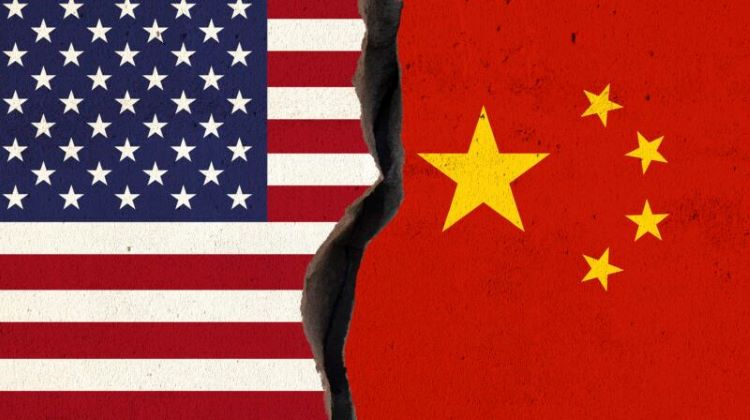
Higher U.S. interest rates, regulatory scrutiny, slower economic development, and U.S.-China tensions have limited Greater China IPOs in the previous three years.
In a research, EY said that mainland China and Hong Kong had a dramatic fall in listings while the U.S. saw a big increase in IPOs and revenues.
Chan, located in Shanghai, said several macro factors are turning around, which might encourage additional Hong Kong IPOs.
“We are seeing a reversing trend,” he told CNBC. More U.S. dollar money are returning to Hong Kong. The key reason is that Hong Kong has previously planned for these uncertainties.”
The Hang Seng Index has risen almost 5% year-to-date, reversing a four-year fall, the worst in its history, as reported by Wind Information.
display content
“Our HK cap markets team is busy with a strong H2 pipeline. In an email Wednesday, Morrison Foerster Hong Kong global co-chair of private equity practice Marcia Ellis said she expects numerous HKSE listings.
She added many firms seeking to list on mainland China’s A share market had switched to Hong Kong. Previously, CSRC certification slowed things down, but now our team gets it quickly.”
China announced new venture capital regulations in June and officially supported IPOs, notably in Hong Kong. IPO approval speed is being watched by investors and experts for signs of a shift.
Chan also noted that many Hong Kong IPOs are by firms from mainland China, whose economic development is “quite satisfactory.”
He expects consumer firms to benefit from IPOs soon.
He stated, “As the economy slowly recovers, a lot of people in China are willing to spend,” especially in developing regions.
National figures reveal that Chinese retail sales are rising slower, up 3.7% in May compared to over 10% in past years.
The U.S. Federal Reserve and other major central banks are slowing interest rate rises, which affects global asset allocation. Many institutions prefer Treasury bonds to IPOs due of high rates.
“If the interest rate can be further cut down, 1% maybe, that would have a significant effect on the IPO market,” Chan added.
EY reported late last month that Hong Kong IPOs raised $1.5 billion in the first half of the year, down 34% from a year earlier. The research states that the Hong Kong Stock Exchange saw roughly 100 IPOs a year in 2021 and 2020, raising tens of billions of dollars.
In the first six months of 2024, mainland China IPOs raised $4.6 billion, down 85% from the year before, according to EY.
At a conference last week, Hong Kong Exchanges and Clearing Limited CEO Bonnie Chan said the exchange has received 73 fresh listing applications this year, a 50% rise over the second half of last year. She is not related to EY’s George Chan.
“The pipeline is building up nicely,” she remarked, referring to 110 IPOs slated for Hong Kong listing. “All we need is good market conditions so these things get launched and priced nicely,” she said.
Enhancing post-IPO performance
“We need a strong pipeline,” Chan of EY remarked. “We need an interested investor with money to invest and good aftermarket performance.”
Hong Kong IPO returns rise. The average first-day return of new Hong Kong stock market listings in the first half of 2024 was 24%, up from 1% last year, according to EY.
Chan said that Hong Kong IPO aftermarket performance has improved over the previous five years. “These things added together are projecting an upward trend for the Hong Kong market [in] 5 years.”
Chan anticipates deals to increase in the second half of 2024.
He anticipates market momentum to improve in 2025 and said those will likely be medium-sized (2 billion to 5 billion Hong Kong dollars ($260 million to $640 million).
Slowing economic growth and geopolitical uncertainties have hurt Chinese startup early-stage funding.
Preqin, an alternative assets research group, reported that foreign venture investing into Greater China projects fell to $19 billion in 2023 from $67 billion in 2021.
Last month, the business said that Greater China investors have engaged in the largest acquisitions in recent years, but U.S. investors have not.
U.S. IPO outlook
Chan of EY anticipates current scrutiny on U.S. IPOs of Chinese firms to be “temporary,” but data security requirements will remain a burden.
The China Securities Regulatory Commission established new guidelines in early 2023 requiring domestic enterprises to comply with national security and personal data protection laws before going public overseas. To list overseas, a China-based firm with over 1 million customers must pass Beijing’s cybersecurity inspection.
Chan stated that as individuals grow more familiar with the Chinese securities regulator clearance procedure and geopolitical issues, more multinational enterprises may choose the U.S. market as their eventual destination.
I think institutional investors will be interested in these large Chinese enterprises because they want to earn money.
He declined to discuss specific IPOs, calling high-profile listings “isolated incidents.”
Didi, which delisted from New York in 2021, denies intentions to float in Hong Kong next year. According to CNBC, fast-fashion manufacturer Shein, which manufactures mostly in China, is looking to list in London after U.S. criticis:m.
Source : CNBC News