Sonali Ray, writer
Brief news
- Neel Kashkari warned that proposed tariffs by President-elect Trump could worsen long-term inflation if retaliatory measures occur from global trade partners.
- He emphasized that while one-time tariffs may not impact inflation escalating trade tensions could complicate the economic landscape.
- Kashkari reassured that the Federal Reserve remains focused on economic conditions, prioritizing job opportunities over political influences in policy decisions.
Detailed news
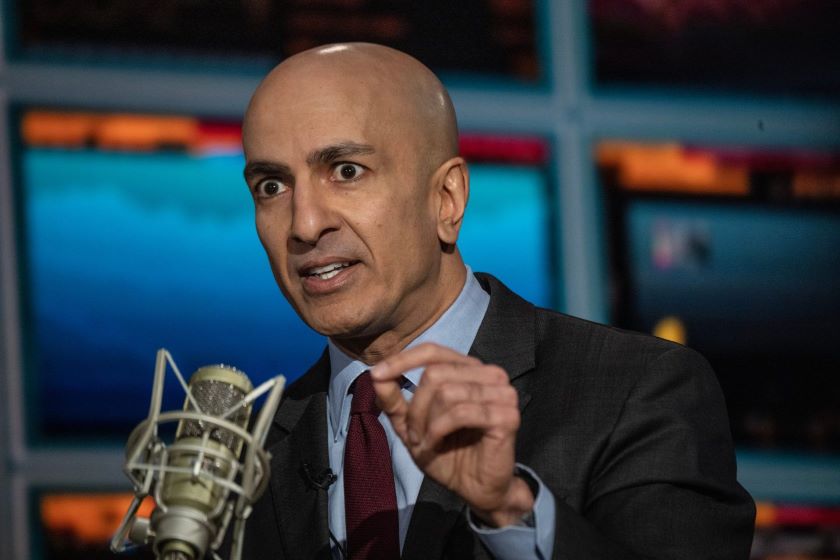
Neel Kashkari, the President of the Minneapolis Federal Reserve, stated on Sunday that the tariff plans proposed by President-elect Donald Trump might make long-term inflation worse if global trade partners were to strike back against them.
In an interview with CBS’s “Face the Nation,” Kashkari is quoted as saying that one-time tariffs “shouldn’t have an effect long run on inflation.”
“If there is a tit for tat and it is one country imposing tariffs and then responses and it is escalating, then the challenge becomes more difficult with each passing day.” Kashkari stated that this is the point at which the situation gets more worrisome and, to be honest, a great deal more unknown.
During his first term in office, President Trump slapped a series of import levies on Chinese goods, which prompted China to respond by imposing its own set of tariffs on the United States. This effectively started a trade war between the two countries.
During his second term in office, one of the most important economic initiatives that Trump has proposed is to impose universal tariffs on all imports from all nations, with a rate of sixty percent especially aimed on China.
There have been several instances in which economists, Wall Street experts, and industry executives have voiced their concerns over the inflationary impact of that tough trade strategy. This is particularly concerning given that inflation has only recently started to decrease from its heights during the epidemic.
The statement made by Kashkari was that “we have made a lot of progress in bringing inflation down.” In other words, I don’t want to announce that I’ve won just yet. Despite the fact that we are now on a positive route, we still need to finish the work.
As inflation approaches the central bank’s objective of 2%, the Federal Reserve (Fed) passed its second straight interest rate drop on Thursday, continuing its attempt to relax monetary policy. According to Kashkari, he anticipates that there will be another cut in December; however, this will be contingent on “what the data looks like” at that present moment.
When it comes to Trump’s other significant policy initiatives, such as a comprehensive plan to deport immigrants, Kashkari pointed out that the danger of inflation is still unknown, and as a result, the Federal Reserve is continuing to take a “wait and see” attitude before making any adjustments to its policy.
A number of Trump’s supporters, including Elon Musk, CEO of Tesla, a billionaire, have expressed their willingness to provide the president with influence on the decisions that the Federal Reserve makes about policy. The central bank considers its political independence to be a fundamental characteristic that enables it to formulate monetary policy only on the basis of the state of the economy in the United States, rather than on the basis of election incentives.
Kashkari, on the other hand, has stated that he is not concerned about politics becoming a factor in Fed decisions.
He stated, “I am certain that we will continue to concentrate on job opportunities in the economic sector.” “That is what ought to be dictating what we are doing, and currently, that is what is dictating what we are doing.”
Source : CNBC news