Sonali Ray , writer
In brief
- Trump agreed to a two-week ceasefire with Iran minutes before his strike deadline, brokered by Pakistan, conditioned on Iran reopening the Strait of Hormuz.
- Both sides claimed victory — the U.S. citing military success, Iran calling it a surrender — with formal talks set to begin in Islamabad on April 10.
- The truce is fragile: attacks continued hours after the deal, Lebanon was excluded, and the Strait remains largely closed.
In details
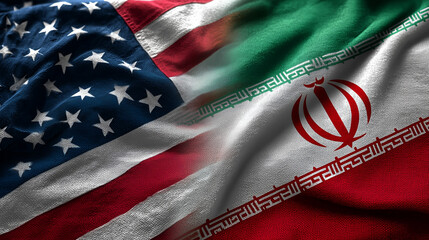
In a dramatic reversal that stunned the world, President Donald Trump stepped back from the edge of catastrophic escalation Tuesday evening, announcing a two-week ceasefire with Iran just ninety minutes before his own deadline — and averting what could have been one of the most destructive military strikes in modern history.
Hours earlier, Trump had warned in an ominous social media post that an entire civilization could perish before dawn if Tehran refused to comply with his ultimatum. The ceasefire announcement came more than five weeks after the United States and Israel launched the war against Iran. CNBC By nightfall, the apocalyptic rhetoric had given way to a conditional truce — and the world collectively exhaled.
How It Happened
The breakthrough was brokered not in Washington or Tehran, but in Islamabad. Pakistan’s Prime Minister Shehbaz Sharif asked Trump to extend his deadline by two weeks, and separately urged Iran’s leadership to reopen the Strait of Hormuz as a goodwill gesture. NBC News Trump credited those conversations directly, and announced on Truth Social that he would suspend all bombing and attacks on Iran — on the strict condition that Tehran immediately and fully reopen the strait.
Iran’s Foreign Minister Abbas Araghchi confirmed his country’s acceptance shortly after. He stated that safe passage through the Strait of Hormuz would be permitted for two weeks, through coordination with Iran’s armed forces. NPR
Pakistan’s Prime Minister has since invited both the American and Iranian delegations to meet in Islamabad on Friday, April 10, to begin formal negotiations. NBC News
A Day of Terrifying Brinkmanship
Tuesday was, by any measure, one of the most volatile days in recent geopolitical memory. Trump began the morning with a post warning that civilizational destruction was hours away. American B-52 bombers were reported to be en route to Iran before the ceasefire announcement was made. Al Jazeera In the hours leading up to the 8 p.m. Eastern deadline, U.S. and Israeli strikes had intensified, hitting railway and road bridges, an airport, and a petrochemical plant, while U.S. forces also struck targets on Kharg Island — Iran’s main oil export hub. CNBC
The threats drew swift and sharp condemnation from across the globe. Legal scholars warned that deliberately targeting civilian infrastructure — power plants, bridges, water systems — could meet the threshold for war crimes under international law. The United Nations Secretary-General and Pope Leo both publicly condemned the ultimatum. At least fifteen countries across Asia, Europe, and the Middle East were working in parallel with Iran to help reopen the strait before the deadline. Council on Foreign Relations
Both Sides Claim Victory
In a pattern that has come to define modern conflict diplomacy, Washington and Tehran each declared the outcome a triumph — with starkly different narratives.
Trump framed the pause as proof that U.S. military objectives had already been accomplished. At a Pentagon press conference the following day, Defense Secretary Pete Hegseth declared that Operation Epic Fury had delivered a “historic and overwhelming victory,” leaving Iran “combat ineffective for years to come.” Council on Foreign Relations White House Press Secretary Karoline Leavitt echoed that framing, saying the military’s success had created the leverage needed to bring Iran to the negotiating table.
Iran’s Supreme National Security Council told a very different story, issuing a statement declaring that Washington had essentially surrendered to the Iranian people’s demands. Tehran’s position is that nearly all of its war objectives have been achieved, and it framed Trump’s acceptance of Iran’s 10-point proposal as a capitulation. NBC News
That proposal — whose full contents have not been publicly released — reportedly includes the withdrawal of all U.S. combat forces from regional bases, the lifting of all sanctions, the release of frozen Iranian assets, full compensation for war-related damages, and a formal transit protocol for the Strait of Hormuz that would leave Iran in a supervisory role. Trump, who had rejected the same proposal as “not good enough” just a day earlier, now called it a workable foundation for negotiations — though it remains unclear what changed in the intervening hours. CNBC
The Strait: Open, But Just Barely
Traffic through the Strait of Hormuz — through which roughly 20% of the world’s daily oil supply typically flows — had slowed to a near-complete standstill since the war began, with only about 5% of pre-war shipping volumes getting through. CNN
By Wednesday morning, at least two vessels had transited the strait, according to ship-tracking service MarineTraffic — but neither carried oil, and overall traffic had not meaningfully picked up. CNBC Shipping executives expressed deep uncertainty, with one telling reporters that their vessels remained anchored in the Persian Gulf because they lacked any guarantee of crew safety.
The International Air Transport Association warned that it would take months — not weeks — for jet fuel supplies and prices to normalize, even assuming the strait stays open. CBS News The disruption to refining capacity across the Middle East is simply too severe for an overnight recovery.
Ceasefire, But Not Everywhere
The truce is far from comprehensive. Israeli Prime Minister Benjamin Netanyahu confirmed Israel’s support for the agreement but stated clearly that it does not apply to Lebanon, where Israeli forces have continued strikes targeting Hezbollah. Council on Foreign Relations That position directly contradicted Pakistan’s Prime Minister, who had announced the ceasefire covered all fronts, including Lebanon.
Iran accused Israel of violating the ceasefire through its strikes on Lebanon and threatened to withdraw from the agreement altogether. CNN Meanwhile, Gulf countries including Kuwait, Bahrain, Saudi Arabia, and the UAE activated air defence systems and reported incoming missile and drone attacks in the hours after the ceasefire was announced. NBC News
A source briefed on the negotiations described the truce as a “trust-building exercise” and acknowledged that the U.S. side harbours real concerns that Iran may be using the window primarily to buy time.
Markets React, World Watches Nervously
Financial markets, at least, responded with relief. Oil prices fell as much as 16% following the announcement, while U.S. stock futures surged. CNBC The Nikkei index in Tokyo jumped sharply, and the dollar weakened as traders priced in the possibility of energy supplies resuming.
Global leaders welcomed the ceasefire, though carefully. Germany’s Foreign Minister called it a crucial first step while warning that the consequences of renewed conflict would be “incalculable.” Australia’s energy minister urged citizens not to expect fuel prices to fall immediately. South Korea and Japan — both heavily dependent on Middle Eastern oil — expressed hope that the talks in Islamabad would lead to a durable agreement.
Vice President JD Vance, Special Envoy Steve Witkoff, and Jared Kushner are expected to lead the U.S. delegation at the Islamabad talks. Council on Foreign Relations
What Comes Next
Washington and Tehran remain far apart on what a comprehensive peace settlement would look like, and analysts note that ceasefire violations have already begun on multiple fronts. Al Jazeera The two weeks ahead will test whether the diplomatic opening can be converted into something lasting — or whether this is simply the latest in a series of deadlines that have been extended, breached, and reset.
Experts caution that Iran retains significant leverage over the Strait of Hormuz and that no regime change has occurred in Tehran. Council on Foreign Relations The war, now in its sixth week, has already claimed more than 5,000 lives across nearly a dozen countries.
For now, the bombs have stopped falling — and that, in a day that began with talk of civilizational annihilation, is no small thing. Whether the silence holds is the question the world will be watching Islamabad to answer.
Source: NBC News, Reuters, The Guardian, Al Jazeera, CNN, and Cbs