Sonali Ray, writer
In brief
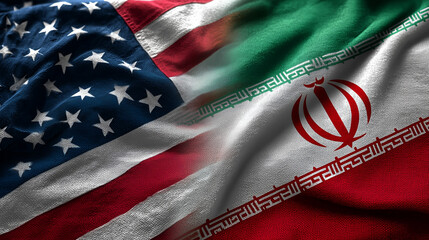
- Tensions between the U.S. and Iran are escalating as President Trump demands the reopening of the Strait of Hormuz by a set deadline, threatening severe consequences if an agreement is not reached.
- Iran maintains its position against time constraints for negotiations and refuses to reopen the Strait as part of a temporary ceasefire, asserting its demands are based on self-interests and confidence in its defense capabilities.
- The ongoing conflict has resulted in significant casualties on both sides, with thousands of lives lost, and has led to increased military actions, including airstrikes and attacks on infrastructure, raising concerns about potential war crimes and the humanitarian impact of the war.
Detailed news
Tehran was under pressure to immediately reopen the Strait of Hormuz on the eve of a new ultimatum from President Donald Trump. On Monday, the United States and Iran were working on an arrangement to end their five-week-old deadlock.
Trump has warned to “rain hell” on Iran if they don’t strike an agreement by the end of Tuesday that would allow traffic to start up again on the important waterway for the world’s oil supplies.
Iran effectively closed Hormuz, a route for almost 20% of the world’s oil and natural gas, in reaction to attacks by the US and Israel in February. Iran has exploited its control over the canal to get what it wants in negotiations, and on Monday it showed that it didn’t want to give it up too quickly.
A high-ranking Iranian official told Reuters that Iran will not accept time constraints or escalation to conclude an agreement. It also will not reopen the Strait as part of a temporary ceasefire. The official said that Washington was not ready for a long-term ceasefire.
A person who knows about the plans said that the Pakistani-facilitated plan, which came out of lengthy discussions that took place overnight, called for a ceasefire right once and for negotiations on a more thorough peace agreement to be finalized within 15 to 20 days.
Field Marshal Asim Munir, the chief of Pakistan’s army, discussed to Iranian Foreign Minister Abbas Araqchi, special envoy Steve Witkoff, and U.S. Vice President JD Vance “all throughout the night long,” according to the source.
On Monday, Iran’s foreign ministry said that Tehran had made articulated firm perspective and requirements grounded on its self-interests and conveyed them through intermediaries.
Esmaeil Baghaei, a spokesperson for the Ministry, said that “warning and threats to commit war crimes” were not compatible or negotiable. He also said that the details of their response would be broadcast in due course of time.
Baghaei said during a press conference that Iran’s demands “should not be seen as a sign of compromise, but as a sign of its confidence in defending its positions.” He said that the US’s earlier requests, such a 15-point plan, were rejected down because they were too hard to meet.
One of the many ideas was ceasefire proposal
At 1 p.m. ET (1800 GMT), Trump will discuss about the ceasefire proposal at a press conference, as stated by the White House official who spoke to Reuters. Some words given by them are –“This is just one of many ideas,” but Trump hasn’t liked this one, this truly shows Trump attitude towards Iran. They called the U.S. attack against Iran “Operation Epic Fury continues.”
Brent crude prices fell 36 cents to $108.67 per barrel by 1222 GMT as investors thought about how likely a ceasefire would have it’s impact.
Trump as if threatening posted on his Truth Social platform on Sunday that he would target Iran’s oil and transportation infrastructure again if Iran didn’t reach a compromise and reopen the Strait by Tuesday. In a later post, he gave a more specific deadline: “Tuesday, 8:00 PM Eastern Time! (Wednesday 0000 GMT).”
Anwar Gargash, an adviser to the president of the United Arab Emirates, said that any settlement must guarantee passage through Hormuz. He further cautioned that an agreement that didn’t keep Iran’s nuclear program, missiles, and drones under check would lead to “a more perilous, more mercurial Middle East.”
On Monday more fresh airstrikes were reported this war has been commencing since last five weeks which has resulted loss of thousands lives and hurting economies by raising oil prices.
Iranian state media stated that Majid Khademi, the head of intelligence for the Revolutionary Guards, has died. Israel broadcasted that it was responsible for his death on Monday.
Fars News Agency said on Sunday that a U.S.-Israeli attack on the data center at Tehran’s Sharif University of Technology destroyed thousands of other services and the infrastructure that supports the country’s artificial intelligence platform.
Israel says it will destroy Iran’s infrastructure.
On Monday Israel Katz, the Israeli defense minister, stated that he would destroy Iran’s infrastructure and destroy all their leaders “one by one.”
This destructive scenario is never-ending On Monday, again Israel stated it had hit Iran’s South Pars petrochemical plant in Asaluyeh. According to Iran’s National Petrochemical Company, emergency and firefighting workers were able to put out the fire at the plant. There were no deaths or injuries reported.
Tasnim news agency said that the power supply was shut down after attacks on two enterprises that provided the petrochemical complex with electricity, water, and oxygen.
Another reason for acceleration of war was when Israel struck the South Pars gas field in mid-March, which Iran shares with Qatar, Iran started hitting energy non – stop targets all throughout the Middle East.
The International Atomic Energy Agency said on Monday that military strikes around the Bushehr nuclear power plant in Iran but no did not demolished or shattred it.
Trump has given statement after statement now in this he has warned Iran many times that he will target civilian infrastructure, such as bridges and power plants.
Now this type of attack can be considered as war crimes, according to experts but the International Criminal Court can’t do anything like lacking competence because the countries involved aren’t members of the court.
The Geneva Conventions has stated clearly that attacking civilian targets is against the law and that people who are fighting must differentiate between “civilian objects” and “military objectives.”
Iran on-going resistance.
Iran’s weekend attacks on petrochemical plants and a ship linked to Israel in Kuwait, Bahrain, and the UAE showed that the country can put up a strong resistance, and even if Trump recurring statement that he has destroyed its missile and drone capabilities.US has underestimated Iran’s bolster ability.
According to the U.S.-based rights group HRANA, the war in Iran has killed about 3,540 individuals, including at least 244 children.
Israeli emergency agency MDA announced on Monday that at least four Israelis were killed after warhead detonated a residential building in Haifa, northern Israel, overnight. This brought the overall number of Israeli noncombatant deaths from Iranian and Hezbollah attacks to 23.
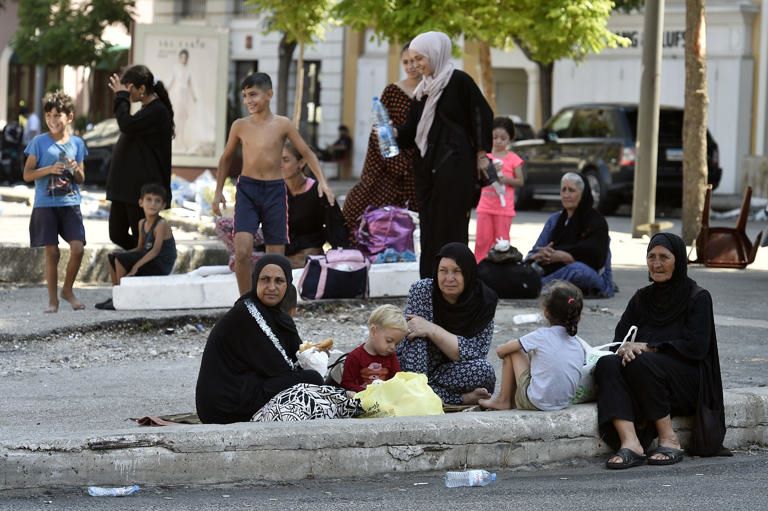
Israel has also invaded southern Lebanon and attacked Beirut in a struggle against Iran-backed Hezbollah fighters. This has been the most lethal destructive spread of assault on Iran.
Lebanese officials report that 1,461 people have died, including at least 124 children.
Thirteen American soldiers have died, and hundreds more have been injured.
Source: CNBC news