Sonali Ray, writer
Brief news
- A strike at East and Gulf coast ports may raise costs for food and consumer goods but is expected to have limited overall economic impact if brief; President Biden could potentially intervene to suspend it.
- Key industries like coal and agriculture may face challenges, with potential shortages of perishable goods if the strike extends; however, companies have likely prepared by increasing inventory.
- The strike could exacerbate inflation concerns, particularly if it lasts beyond a week, complicating the Federal Reserve’s decision-making ahead of the upcoming presidential election.
Detailed news
A strike affecting ports on the East and Gulf coastlines may elevate costs for food, automobiles, and many other consumer items, although is anticipated to result in very limited overall effects, provided it does not last for an extended duration.
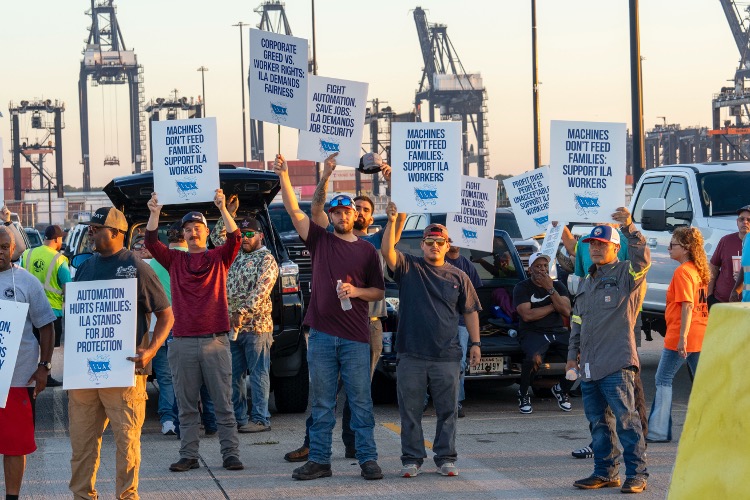
Producers of various goods, including trucks, toys, and fake Christmas trees, encounter challenges following the International Longshoremen’s Association’s announcement of a work stoppage at significant Eastern container and cargo ports.
The effect will be contingent upon the duration from a macro perspective. President Joe Biden, empowered by the Taft-Hartley Act, has the authority to mandate an 80-day cooling-off period that would temporarily suspend the strike; however, there is scant evidence suggesting he will take such action.
This will instill optimism among negotiators for the union and the U.S. Maritime Alliance that the strike will not prolong and exacerbate difficulties for the U.S. economy as it approaches the crucial Christmas shipping season.
Joseph Brusuelas, chief economist at RSM, stated, “Labor action by port workers along the East and Gulf coasts of the United States will result in a slight decline in GDP,” estimating the weekly impact at just over 0.1 percentage point of gross domestic product and $4.3 billion in lost imports and exports.
“Considering the American economy is currently experiencing a 3% growth rate, we do not anticipate that the strike will disrupt the trajectory of the domestic economy or pose a risk to a premature and unwarranted conclusion of the ongoing economic expansion,” he stated.
The $29 trillion U.S. economy has successfully navigated several challenges and has seen growth for the past two years. The Atlanta Federal Reserve is monitoring a 2.5% growth rate for the third quarter, propelled by an increase in net exports.
A lengthy cessation of labor, however, might jeopardize that.
Affected regions
Key industries encountering difficulties include coal, electricity, and agricultural products. A general guideline is that for each day of a strike, it requires around one week to restore ports to regular operational levels.
Citigroup analyst Andrew Hollenhorst stated in a client note that the expenses associated with the strike will increase over time due to the accumulation of export and import backlogs. “Perishable items such as imported fresh fruit may be the initial products to experience shortages.” Should the strike persist for an extended duration, shortages of specific industrial inputs may ultimately hinder output and elevate prices for manufactured items such as automobiles.
However, there are possible mitigators to the harm a hit might inflict.
West Coast ports are anticipated to assume a portion of the freight business now allocated to eastern ports. Additionally, several enterprises had foreseen the cessation and accumulated inventory in advance.
Furthermore, supply chain pressures, which were significantly intensified during the pandemic, have mostly diminished and are currently below pre-Covid levels, as indicated by a New York Fed measure.
“We believe concerns regarding the possible economic repercussions are exaggerated,” stated Bradley Saunders, North America economist at Capital Economics. Recent frequent disruptions to supply systems have heightened manufacturers’ awareness of the hazards associated with maintaining low stockpiles. Consequently, it is probable that companies have implemented preventive steps in anticipation of a strike, particularly since the ILA has been suggesting this possibility for months.
Saunders expressed his belief that there is a significant likelihood the White House may intervene and implement a cooling-off period, notwithstanding the administration’s pronounced pro-union inclinations.
“The administration is unlikely to jeopardize its recent economic achievements less than two months before a closely contested election,” he stated.
Inflation risk
Simultaneously, several additional concerns may complicate matters.
Disruptions in the supply chain may intensify inflation at a time when pricing pressures seem to have diminished from their mid-2022 apex, which sent the annual rate to its highest point in over four decades. The maritime group is advocating for salary increases of 50%, a development that might potentially rekindle inflation since wage pressures have diminished. The union seeks substantial hikes and with assurances against automation.
This is evidently temporary. “They will achieve some resolution,” stated Christopher Ball, an economics professor at Quinnipiac University. “Consequently, in the short term, if it persists beyond a few days or exceeds a week, it will undoubtedly elevate the prices of numerous goods and services.” The strike may induce short-term price surges, perhaps significantly elevating the costs of specific commodities.
Ball anticipates that the primary sectors affected would be food and cars, both of which have imposed disinflationary or deflationary pressures in recent months. He noted that small companies near the ports may also have negative effects.
“If the situation persists for a week or two, businesses will encounter significant shortages, necessitating price increases to avert widespread scarcity of those goods,” Ball stated.
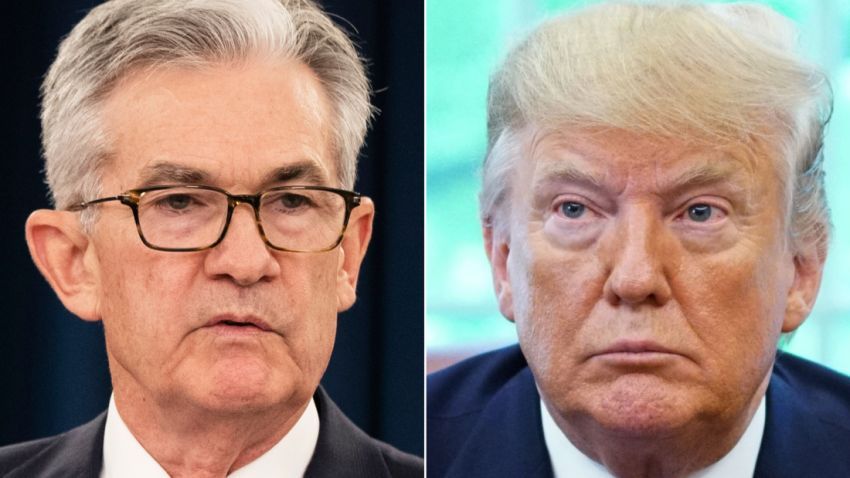
This occurs at an inconvenient moment for the Federal Reserve. Last month, the central bank reduced its benchmark borrowing rate by 50 basis points and signaled that further reductions are anticipated as it becomes more assured that inflation is subsiding.
Nonetheless, the strike may hinder decision-making processes. The October jobs report, the final one the Fed will review prior to its Nov. 6-7 policy meeting, will be affected by layoffs resulting from strikes and Hurricane Helene.
The next presidential election on November 5 coincides with the economy as a critical topic.
“This would significantly complicate the Federal Reserve’s objectives, as they are unable to accurately assess the economy’s performance,” stated Jim Bianco, chairman of Bianco Research, in an interview with CNBC.
Federal Reserve Chair Jerome Powell stated on Monday that he anticipates the central bank would reduce interest rates by an additional half percentage point by year-end, a pace that is considerably slower than market expectations.
Source : CNBC News