Anamika Dey, editor
In brief
- Hormuz closure = historic oil shock. Iran shutting the strait cut 10–11M barrels/day, spiking crude from $73 to $119/barrel.
- Americans felt it at the pump. Gas up 34% in 5 weeks, inflation headed to 4.2%, recession odds jumped to 37%.
- Markets were volatile. S&P down ~9%, then surged on ceasefire news, then wobbled again within days.
- Recovery will be slow. Analysts say oil won’t return to pre-war prices for at least a year; Iran is now charging tanker transit fees on top of it all.
Detailed news
From a 100-mile waterway in the Persian Gulf to the number on your gas station sign, the U.S.-Iran war has reached into everyday life in ways that headlines alone cannot capture.
Six weeks ago, a barrel of crude oil cost $67. Today it costs close to $100. At its worst, it crossed $120. That single number has become the most anxiously watched figure in the global economy — rising with every missile, falling with every ceasefire rumor. This is the story of how one conflict, igniting in a narrow stretch of water most people couldn’t find on a map, managed to shake the foundations of the entire global economic order.
| +48%
Oil price surge since Feb 28 |
$4.00+
US avg. gas price per gallon |
4.2%
OECD projected US inflation 2026 |
37%
US recession odds (up from 22%) |
The Little Waterway That Holds the World to Ransom
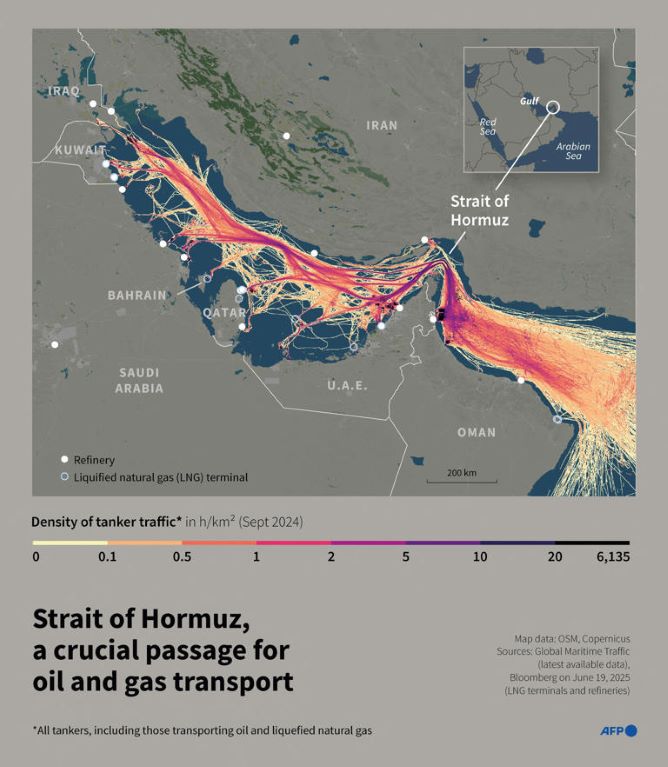
To understand why this war hit so hard and so fast, you need to understand one stretch of geography: the Strait of Hormuz. Roughly 100 miles long and just 21 miles wide at its narrowest, it doesn’t look impressive on a map. But through it flows approximately 20% of the world’s entire daily oil supply — between 12 and 15 million barrels every single day. ( [CNN Business])
When Iran effectively closed the strait on February 28, the International Energy Agency described it as the largest supply disruption in the history of the global oil market — eclipsing even the 1973 Arab oil embargo. ( [IEA via Wikipedia])
The IEA called it the “largest supply disruption in the history of the global oil market.” Not since the 1970s energy crisis has the world faced anything quite like this.
By March 10, collective Gulf oil production had dropped by 6.7 million barrels per day. By March 12, the number had grown to at least 10 million barrels per day. Wells were being shut in. Infrastructure was sitting idle. And every day the strait stayed closed, global inventory depleted a little faster. ( [IEA / Wikipedia])
Unlike the 2022 Russia-Ukraine shock, this disruption is about a physical chokepoint that cannot be compensated for — rerouting and substitution simply don’t work when the ships themselves cannot safely transit the water. ( [Al Jazeera])
You Felt It at the Gas Station Before You Read It in the News
For most people, an oil crisis doesn’t arrive as a headline. It arrives as a number on a gas station sign. In America, that number has been climbing since late February.
| $2.98
US gas price before war (Feb 27) |
$4.00+
US gas price by April 2026 |
$5.00+
California gas price, mid-March |
That’s a 34% jump in about five weeks. Higher energy costs seep into everything: airlines raise ticket prices, freight rates climb, and farmers pay more for fertilizer. The near-total halt of tanker traffic has caused a significant disruption in the global supply of sulfur — spiking fertilizer costs, metal leaching in the copper industry, and sulfuric acid prices worldwide. ( [IEA / Wikipedia])
The OECD has projected U.S. inflation will rise to 4.2% in 2026 — far above the 2.68% average in 2025. ( [OECD Economic Outlook]) The March inflation report showed the biggest single-month CPI spike in four years. ( [AP]) Consumer sentiment plunged 10.7% in April, with year-ahead inflation expectations jumping to 4.8% — up from 3.8% in March. ( [University of Michigan Survey])
| Goldman Sachs warned that if the Strait remains closed, oil could hit $150 per barrel and U.S. inflation could become entrenched. BCA Research estimated the world had already lost 4.5–5 million barrels per day — and warned that number could double by mid-April as strategic reserve releases and sanctions waivers run dry. The U.S. and IEA released a record 400 million barrels from strategic reserves as a short-term fix. (Sources: Forbes, IEA) |
Forbes data shows consumer sentiment has cratered most sharply among those earning under $50,000 per year — they have the least cushion, the oldest cars, and the thinnest margin between making ends meet and falling behind. ( [Forbes])
Wall Street Was Watching Every Missile — and Flinching
Stock markets have spent six weeks oscillating between panic and relief, often within the same trading session. Bad news from the strait sends stocks down and oil up; ceasefire rumors reverse that instantly.
The S&P 500 fell roughly 9% from its late-January peak. International stocks underperformed U.S. equities by 10.2% since the conflict began, with ~2 percentage points of that gap attributable to a strengthening U.S. dollar. ( [Forbes]) Treasury yields jumped from 3.97% before the war to 4.31% by April 10, making mortgages more expensive for every American trying to buy a home. ( [AP])
Then came the ceasefire on April 8. The Dow surged 1,325 points — its best single day since April 2025. The S&P 500 gained 2.51%, the Nasdaq jumped 2.8%, and WTI crude plunged 16.41% to $94.41 — its biggest daily drop since April 2020. ( [CNN Business])
Asian and European markets followed: South Korea’s Kospi surged nearly 7%, Japan’s Nikkei gained 5.4%, and Germany’s DAX soared over 5% — each posting their best day since March 2022. ( [CNBC])
“TACO is becoming less of a joke and more of a trading strategy across markets. Investors have seen enough last-minute pivots to know that a two-week deadline isn’t necessarily what it seems.” — Zavier Wong, eToro market analyst (CNBC)
By Friday, April 10, doubts had crept back. Only a handful of ships had actually transited the Strait since the deal. The S&P 500 fell 0.1%. Consumer sentiment hit a record low. Inflation data disappointed. ( [AP])
The Word Economists Hate Most Is Back — and It Rhymes With Inflation
There’s a word that economists dread above most others: stagflation. Stagnant growth + high unemployment + persistent inflation — all at once. Normally central banks cut rates when growth slows. But cutting rates in an inflationary environment pours gasoline on the fire. The Fed ends up paralyzed.
| Signs of stagnation
February jobs report came in surprisingly weak. Recession odds rose from 22% to 37% (Forbes). Corporate investment confidence falling. International stocks down 10.2% vs. pre-war levels. |
Signs of inflation
Biggest CPI spike in 4 years in March (AP). Year-ahead inflation expectations hit 4.8% (U.Mich). Gas prices up 34% since Feb 27. Fertilizer and food costs rising globally (IEA/Wikipedia). |
The odds of a 2026 U.S. recession were 22% before the bombing of Iran and have risen to 37%, rising a further 3 percentage points in a single week as peace negotiations stalled. ( [Forbes])
There is, however, a more optimistic signal. High-frequency data tracked by Forbes shows the U.S. consumer has remained resilient so far: restaurant reservations show no distress, air travel continues, and the Redbook weekly retail spending index shows no significant negative impact yet. ( [Forbes])
Even If the War Ends Tomorrow, Your Gas Bill Won’t Know
Even if lasting peace is reached, the economic pain won’t simply evaporate. The Strait is beginning to reopen, but economists warn that price relief will be slow, uneven, and nowhere near immediate.
Brent crude oil price — verified milestones
| Milestone | Date | Brent $/bbl | Source |
| Pre-war level | Feb 27 | $73 | CNN Business |
| War begins, oil spikes | Mar 1 | $85 | CNBC |
| Strait closed — peak crisis | Mar 12–15 | $119 | Al Jazeera |
| Ceasefire announced | Apr 8 | $95 (–16% in 1d) | CNN Business |
| Ceasefire doubts return | Apr 10 | ~$97 | AP |
Economists at Coface project that even under a best-case ceasefire scenario, it will take three to six months for oil prices to fall meaningfully. ( [TIME]) Analysts at Sparta Commodities do not expect crude to return to pre-war levels of ~$75 per barrel within the next year at minimum. ( [TIME]) Reuters analysts lifted their full-year 2026 Brent forecast by 30% to $82.85 per barrel. ( [Reuters / Investing.com])
The war has taken 10 to 11 million barrels of crude oil offline per day — all of those depleted inventories need to be replenished, keeping prices elevated even as supply gradually returns. ( [TIME])
| Even if the Strait reopens fully today, restoring production to pre-war levels will take months. Wells shut in can’t simply be switched back on overnight. Infrastructure needs repairs. Insurance markets need to re-price. Ships need to be convinced it is safe to sail. The world will be living with the consequences of this crisis long after the guns fall silent. (Sources: Al Jazeera, TIME, Reuters) |
Iran is now asserting the right to charge transit fees of $1–2 million per tanker — what Capital Economics analysts called a ‘de facto partial nationalisation of the shipping route,’ adding roughly $1 per barrel to global oil prices. ( [CNN Business])
This Isn’t Just America’s Problem — the Whole World Is Feeling It
The crisis has not landed equally. The damage map follows the shape of global energy dependency — and nowhere has it hit harder than the Gulf itself.
Gulf Cooperation Council states rely on the Strait for over 80% of their caloric intake. When the strait closed, 70% of the region’s food imports were disrupted by mid-March, forcing retailers to airlift staples. Consumer prices spiked 40–120% on basic goods. ( [IEA / Wikipedia]) Iranian strikes on desalination plants — which provide 99% of drinking water in Kuwait and Qatar — turned a financial crisis into a potential humanitarian emergency. ( [IEA / Wikipedia])
| 80%+
Gulf caloric intake via Hormuz |
70%
Food imports disrupted, mid-March |
40–120%
Consumer price spike on basic goods |
South Korea’s Kospi suffered its worst-ever single trading day. Japan’s Nikkei fell sharply. International stocks have underperformed U.S. equities by 10.2% since the conflict began. ( [Forbes]) When global uncertainty rises, money flees to dollar-denominated assets — strengthening the dollar and making dollar-priced oil more expensive for every other currency in the world.
The Ceasefire Arrived. The Relief Lasted About 48 Hours.
Trump posted on Truth Social that he had agreed to suspend military operations for two weeks, contingent on Iran agreeing to a ‘complete, immediate, and safe opening’ of the Strait of Hormuz. ( [NPR]) Iran, in its own statement, said it would ‘regulate passage’ — a careful choice of words that fell considerably short of Trump’s demand.
Iran’s state media emphasized the ceasefire was only temporary: ‘This is not the end of the war but all military branches should follow the Supreme Leader order and cease their fire’. ( [CNBC])
“There are significant hurdles to overcome before the ceasefire agreement can translate into a lasting end to the war.” — Neil Shearing, Chief Economist, Capital Economics (CNN Business)
By Friday, April 10, only a handful of ships had actually transited the Strait. Iran’s Tasnim news agency claimed talks would not happen unless Israel stopped attacks in Lebanon. ( [AP]) Vice President Vance is heading to Pakistan for peace talks this weekend — meaningful progress, but oil is still near $100 and the Strait is barely open.
Before You Spiral — Here’s What’s Actually Holding Up
It would be easy to conclude the picture is uniformly bleak. But there are genuine reasons to believe the worst-case scenarios — $150 oil, entrenched stagflation, global recession — may yet be avoided.
Forbes high-frequency data shows the U.S. consumer has remained resilient: restaurant reservations show no sign of distress, air travel shows no collapse, and the Redbook weekly retail spending index evidences no significant negative impact. ( [Forbes])
TSMC reported a 35% revenue surge in Q1 2026, beating all estimates. ( [Motley Fool]) Meta committed an additional $21 billion to AI infrastructure. The AI boom has not paused.
| Reasons for caution
Oil still ~$100. Ceasefire fragile. Inflation at 4-year high. Consumer confidence at record low. Fed paralyzed. Gulf humanitarian crisis deepening. Recession odds at 37% (Forbes). |
Reasons for optimism
Labor market holding. Consumer spending intact. AI investment surging — TSMC revenue +35% (Motley Fool). Peace talks underway. Stocks recover after 80%+ of major geopolitical events (Glenview Trust / Forbes). |
| Historical context: Glenview Trust’s analysis of 29 major geopolitical events since 1940 found stocks were higher one year later in over 80% of cases — including a 28.4% gain after the 2003 Iraq War. The key condition every time: oil prices can’t stay too high for too long. (Source: Forbes / Glenview Trust) |
So Where Does This Leave the Rest of Us?
The war nobody wanted has produced the oil shock nobody planned for, the inflation nobody needed, and the market volatility everybody hates. It has exposed how dependent the modern global economy remains on a single 100-mile waterway — a vulnerability that was known, but never truly felt until ships stopped sailing through it.
The ceasefire of April 8 is a beginning, not an end. Even in a best-case scenario, prices are unlikely to fall sharply or immediately. A meaningful decline in oil and gas prices would take around 3–6 months, and crude is unlikely to return to pre-war levels of ~$75 per barrel within the next year. ( [TIME])
What happens next depends on a peace process that has already started unraveling at the edges — on whether Iran truly reopens a waterway it has spent weeks using as its most powerful bargaining chip, and on whether diplomats in Islamabad this weekend can find a path that hardliners in Tehran and Tel Aviv are both willing to walk down.
The world is holding its breath. And somewhere in the Persian Gulf, a tanker captain is looking at a radar screen, wondering if it’s safe to sail.
sources: AP / Washington Times · CNN Business · CNBC · NPR · Forbes · Al Jazeera · TIME · IEA / Wikipedia · OECD Economic Outlook · Deseret News · Reuters / Investing.com · U. of Michigan Survey · Motley Fool