Rohit Baniwal, writer
After gold tumbled alongside equities at the outbreak of the Iran conflict, Morgan Stanley’s metals strategist says the yellow metal has lost its defensive edge — and is now firmly bullish on aluminium as the standout opportunity in 2026’s reshaped commodity landscape.
April 12, 2026 • 9 min read • Markets Desk
LIVE METALS SNAPSHOT
| Gold (spot)
$4,731/oz -7.8% (1 month) |
Silver (spot)
$74/oz -11% (1 month) |
Aluminium (LME)
$3,452/t +10.4% since Iran war |
BCOM Index Q1
+24% Largest Q1 since 1990 |
KEY TAKEAWAYS
|
For decades, gold has been the instinctive refuge when the world goes wrong — the asset investors run to when markets panic, wars start, or central banks lose credibility. But the Iran conflict has exposed a troubling crack in that logic. When bombs started falling in late February, gold did something unexpected: it fell — alongside everything else.
Now, Wall Street is asking whether the precious metal’s famous reputation as a portfolio anchor has been permanently dented. And Morgan Stanley has a clear answer: yes, at least for now. But the bank also has a clear alternative in mind.
“Gold is really acting like a risk asset and not really like a safe haven. Normally, it should be a diversifier in your portfolio, and that’s just not really been happening at the moment.”
— Amy Gower, Metals & Mining Strategist, Morgan Stanley — CNBC Squawk Box Europe, April 2026
The gold portfolio question: what went wrong?
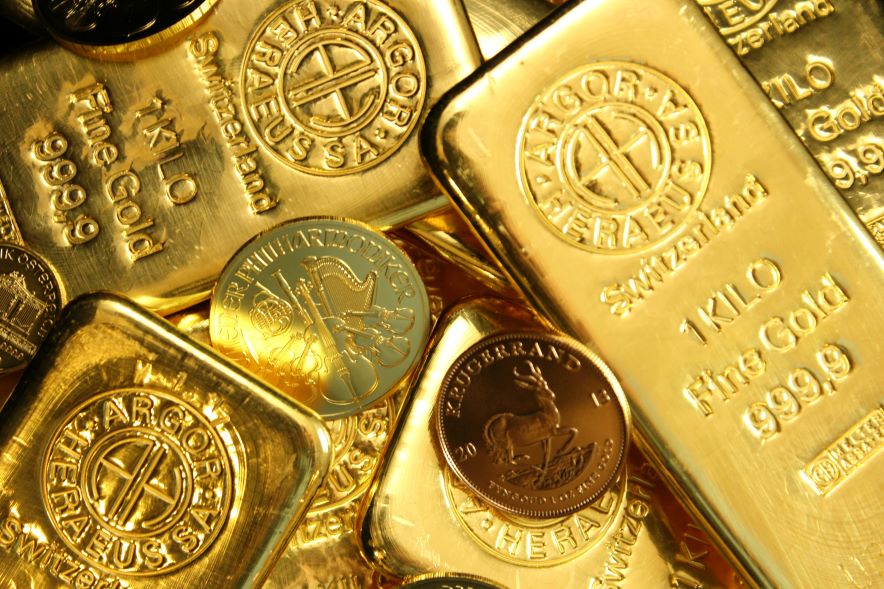
Gold had been on a remarkable run heading into 2026, touching record highs as central banks accumulated reserves and investors sought protection from geopolitical uncertainty. But when the US-Israel war against Iran broke out on February 28, the metal that was supposed to protect portfolios did the opposite — it plummeted alongside equities, credit, and most other global asset classes.
As of this week, gold remains roughly 7.8% down over the last month at $4,731 per ounce, even after a partial recovery sparked by the ceasefire announcement. For portfolio managers who relied on the metal as a diversifier, this was a jarring wake-up call.
Morgan Stanley’s Gower points to a structural reason for this shift. Gold prices are increasingly being driven by large institutional holders — central banks and ETFs — whose liquidation behaviour during a shock can overwhelm traditional safe-haven buying. When liquidity is scarce, even gold gets sold. According to Mining.com, gold-focused funds like the SPDR Gold Shares (GLD) saw more than $7 billion withdrawn as the conflict intensified.
That said, the longer-term picture for gold remains more constructive than recent price action suggests. Oxford Economics notes that gold tends to perform best when geopolitical stress coincides with looser monetary policy and lower real yields — a combination that may yet materialise if the Iran war drags on and forces central banks to ease more aggressively.
Wall Street’s gold price targets: still bullish, long term
Despite short-term doubts about gold’s portfolio role, the major banks have not abandoned their bullish long-term forecasts for the metal — and the targets are eye-catching.
| Institution | Metal / Timeframe | Price Target | Rationale |
|---|---|---|---|
| JP Morgan | Gold — year-end target | $6,300/oz | War adds geopolitical instability premium on top of baseline bullish thesis |
| Deutsche Bank | Gold — year-end target | $6,000/oz | Sustained central bank reserve diversification and dollar weakness |
| Bank of America | Gold — 2026 average | $4,538/oz | Gold continues to stand out as a hedge and alpha source — Michael Widmer |
| Morgan Stanley | Gold — long-term target | $4,800/oz | Q4 2026 target; short-term behaviour questioned but structural trend has further to run |
Silver: 150% in 12 months — but now what?
If gold’s story has become complicated, silver’s is more nuanced still. The metal has been one of the most spectacular performers of the past year, gaining almost 150% over the last 12 months and briefly breaking above $100 per troy ounce in January — a level few thought possible. The rally was fuelled by a powerful mix of safe-haven demand and surging industrial usage, particularly from the solar energy sector.
Morgan Stanley’s Gower acknowledges that silver “has had real reasons to rally,” but cautions that the move above $100 was partly speculative. Since then, silver has retreated more than 11%, settling around $74 per troy ounce — well off its peak. The bank noted some large silver jewellery producers are beginning to shift toward platinum-coated alternatives, with price and volatility beginning to generate a genuine demand response.
Still, the fundamental case for silver remains intact over the longer term. JP Morgan sees silver averaging $81 per troy ounce in 2026 with a Q4 high of $85. More bullishly, analysts cite the gold-silver ratio — still historically wide — as suggesting significant room for silver to outperform gold as the precious metals cycle matures. Silver has also been designated a US critical mineral, cementing its strategic importance alongside its industrial role in AI infrastructure, electric vehicles, and solar panels.
Metal performance since the Iran war began (Feb 28, 2026)
| Metal | Performance / Notes |
|---|---|
| Aluminium (LME) | +10.4% since Iran war |
| BCOM Index Q1 2026 | +24% (largest quarterly gain since 1990) |
| Silver | -11% (1 month) — peak of +150% over 12 months |
| Gold | -7.8% (1 month) — down 28% from peak since war began |
| Copper | -2.3% (early war) — mixed outlook |
The aluminium story: Morgan Stanley’s top pick
If Morgan Stanley is cooling on gold in the near term, it is decidedly warming to aluminium. Gower is “particularly bullish” on the metal, which has been the standout performer in the industrial metals complex since the Iran war began, rising around 10.4% to $3,452 per tonne and hovering just below four-year highs.
The reason is straightforward: supply. Roughly 9% of global aluminium production comes from the Middle East, according to BMO Capital Markets analyst Helen Amos, and as much as 5 million tonnes of regional output may already be facing disruption. Bahrain’s ALBA smelter — the world’s largest — has cut production by 19% of its 1.6 million-tonne annual capacity. Iran also struck Emirates Global Aluminium in late March, causing significant further disruption.
Metals intelligence provider CRU Group believes lower stock levels and continued supply disruption in the Middle East could push aluminium prices toward $4,000 per tonne. Bloomberg’s commodity index data confirms aluminium rose the most among industrial metals in Q1 2026, outperforming copper, nickel, lead, and zinc.
However, analysts caution that aluminium remains primarily an institutional and industrial trade — unlike silver and gold, it is unlikely to see significant retail investor inflows.
The broader commodity reset: a new framework for metals
The deeper message from Morgan Stanley — echoed by Oxford Economics and Bloomberg — is that the metals complex can no longer be treated as a single trade. Each metal is now moving for different reasons, and investors need to be more selective.
Gold’s short-term behaviour has become macro-driven and increasingly tied to institutional flows. Silver is supported by tighter supply-demand fundamentals but carries high volatility risk. Aluminium is benefiting directly from supply disruption and energy cost pressures. Copper sits between strong long-term green energy demand and a softer near-term outlook driven by recession fears and a stronger US dollar.
According to Bloomberg’s commodity outlook, the Bloomberg Commodity Index surged 24% in Q1 2026 — the largest quarterly move since 1990 — driven by the single biggest oil supply shock in recorded history as Strait of Hormuz flows collapsed. More than two-thirds of all commodities are now expected to record price increases in 2026, marking one of the most significant forecast revisions in recent years.
For portfolio managers, the takeaway is clear: the next phase of metals investing may be less about owning a generic hedge and more about identifying where the real structural pressure points lie. Gold may still have a role, but it is no longer the automatic answer it once was.
SOURCES
1. CNBC — Investors are questioning gold’s role in portfolios, says Morgan Stanley (April 10, 2026)
2. TradingView / Invezz — Morgan Stanley questions gold’s safe-haven role, backs another metal
3. Bloomberg Professional — What the US-Iran war means for commodity markets and portfolios
4. Morgan Stanley IM — Commodity Market Outlook: Trends Driving Optimism in 2026
5. Mining.com / BMO — Iran war could leave lasting shock on commodities
6. Oxford Economics — How the Iran war is reshaping commodity markets in 2026
7. CNBC — Aluminium prices surge as Iran conflict chokes supply (March 2026)
8. Canadian Mining Report — US-Iran War & Metals Prices outlook
9. CNBC — Why gold hasn’t moved since the Iran conflict (March 2026)
10. Wikipedia — Economic impact of the 2026 Iran war
| DISCLAIMER: This article is for informational and editorial purposes only and does not constitute financial or investment advice. Commodity and metals prices are highly volatile. Past performance is not a guarantee of future results. Always consult a qualified financial advisor before making investment decisions. |