
Anamika Dey, editor
● BREAKING — LIVE UPDATES
The US Iran blockade, enforced by 12 warships and more than 100 aircraft, has choked off an estimated 90% of Iran’s economy in under 36 hours, according to CENTCOM Commander Admiral Brad Cooper. Trump signals talks could resume “within two days” — as a six-day diplomatic countdown begins.
LIVE SITUATION DASHBOARD
| Blockade active
Day 3 Apr 13 · 10AM ET |
Iran economy hit*
~90% Sea trade (CENTCOM est.) |
Brent crude
$98/bbl +40% since Feb 28 |
Ceasefire expires
Apr 21 6 days remaining |
* US military estimate per Admiral Brad Cooper, CENTCOM. Iran disputes full blockade effectiveness.
KEY POINTS
|
| RELATED COVERAGE ON THIS SITE
→ 21 Hours, No Deal: How the Islamabad US-Iran Peace Talks Collapsed — Full Report Everything that happened inside the marathon Islamabad negotiations that led directly to the blockade → Strait of Hormuz Explained: Why This 21-Mile Waterway Controls 20% of the World’s Oil Background: why the Strait of Hormuz is the world’s most critical energy chokepoint — and what closing it means → Iran’s Nuclear Programme in 2026: What Is Being Demanded, and What a Deal Would Look Like Deep-dive explainer on the nuclear sticking point at the heart of every US-Iran negotiation |
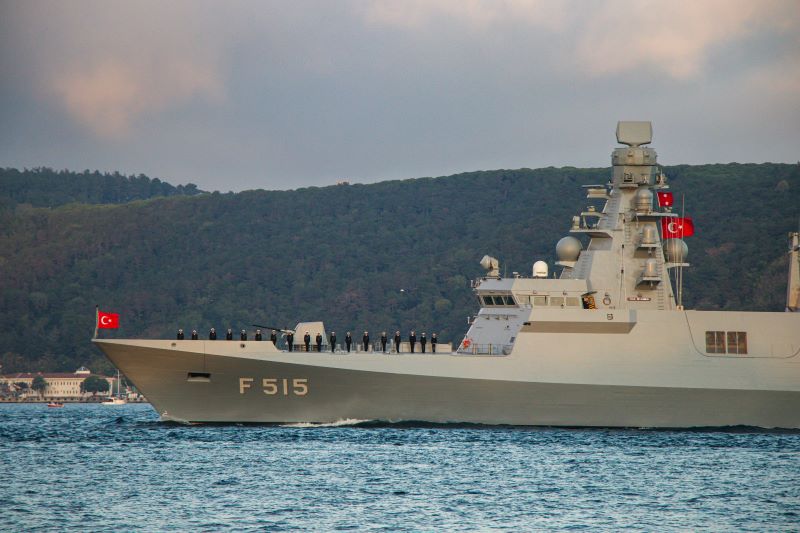
When the US Iran blockade clicked into effect at 10 a.m. ET on Monday, April 13, the world held its breath. In less than 36 hours, it had achieved what six weeks of airstrikes could not: a near-complete shutdown of Iranian maritime commerce. For Tehran, a country that US military officials say depends on the sea for an estimated 90% of its economy, it was a vice tightening around the nation’s financial lifeline. For Washington, it was leverage — the final pressure card before an April 21 deadline that could either deliver a historic nuclear deal or tip the region back into open war.
As of Wednesday, April 15, the US Iran blockade has entered its third day. Admiral Brad Cooper, Commander of US Central Command (CENTCOM), confirmed the situation in an official statement: “An estimated 90% of Iran’s economy is fuelled by international trade by sea. In less than 36 hours since the blockade was implemented, US forces have completely halted economic trade going into and out of Iran by sea.” Eight Iran-linked oil tankers have been intercepted and turned back, including a Chinese-owned, US-sanctioned tanker — the Rich Starry — which was tracked reversing course in the Persian Gulf.
| IRAN’S COUNTER-CLAIM (For journalistic balance):
Tehran disputed the total effectiveness of the US Iran blockade, with the Iranian Consulate in Mumbai posting on April 15 that an Iranian VLCC supertanker crossed the Strait of Hormuz “openly with its tracker on” without any interference. BBC Verify confirmed at least four Iran-related ships crossed the Strait on April 14. CENTCOM has not publicly confirmed or denied these specific crossings. Independent ship-tracking data from Kpler and MarineTraffic shows traffic at historically low levels, but not at absolute zero. |
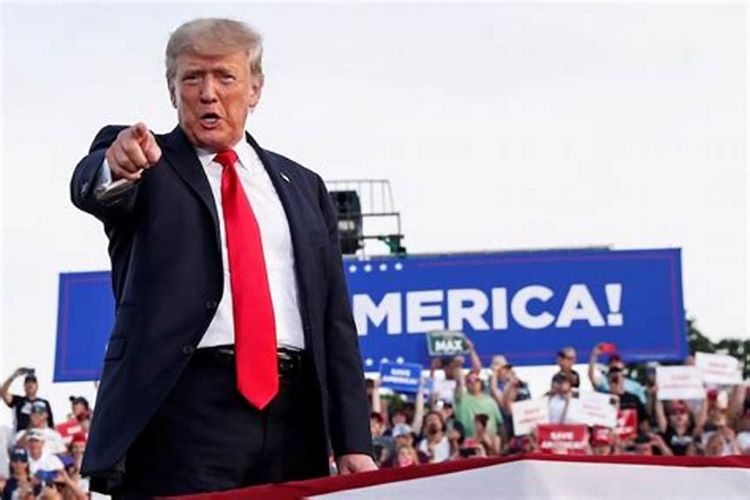
“I think you’re going to be watching an amazing two days ahead. It could end either way, but I think a deal is preferable because then they can rebuild. They really do have a different regime now.”
— President Donald Trump, ABC News, April 15, 2026
How the US Iran blockade physically works
The US Iran blockade targets the entire southern coastline of Iran, covering all ports on the Arabian Gulf, the Gulf of Oman, and the Arabian Sea east of the Strait of Hormuz. Ships transiting between non-Iranian ports are still permitted to use the Strait — preventing a complete global oil shutdown while maximising economic pressure on Tehran specifically.
According to CNN and The War Zone, US naval assets are not operating inside the Strait itself — a region Iran has mined heavily. Instead, the Navy is running a “catch-and-redirect” strategy: intercepting vessels in the Gulf of Oman after they clear the Strait and ordering them to return. “Our net is the Gulf of Oman,” one US official told The Washington Post. The blockade force includes 12 warships, more than 100 aircraft, and over 10,000 US personnel. Six merchant ships complied with orders to turn back in the first 24 hours, per CENTCOM.
The nuclear gap — and why a deal is still possible
The core breakdown at the first round of US Iran talks in Islamabad was stark: Washington demanded a 20-year suspension of all Iranian nuclear activity. Tehran offered 3 to 5 years. That gap of 15 to 17 years is what diplomats are now racing to bridge before April 21.
Back-channel talks via Pakistan have reportedly been narrowing the distance, per Reuters and Rappler. IAEA Director General Rafael Grossi, speaking in Seoul, said a compromise was “possible” — the length of a moratorium is “ultimately a political decision.” The US has also pressed for removal of all 400+ kilograms of highly enriched uranium from Iran. Tehran demands the lifting of international sanctions and unfreezing of approximately $6 billion in oil revenues held in Qatar.
WASHINGTON’S 5 NON-NEGOTIABLE DEMANDS (per White House & CNN)
| Condition Iran must meet for any deal |
|---|
| 1. Complete dismantling of major nuclear enrichment facilities, many already badly damaged in US airstrikes |
| 2. Retrieval and removal of all highly enriched uranium stockpiles (400+ kg) from Iranian territory |
| 3. Full opening of the Strait of Hormuz — with zero tolls charged for any passage |
| 4. End to all Iranian funding of proxy groups — Hamas, Hezbollah, and the Houthis |
| 5. Acceptance of a broader “peace, security and de-escalation framework” covering regional allies |
Global ripple effects — economy, food and energy
The US Iran blockade is now a global economic event. Brent crude has risen 40% since the conflict began and briefly topped $100/barrel. The IMF’s April 2026 World Economic Outlook cut global growth to 3.1%, describing the Hormuz closure as the worst oil supply shock since 1973. The UN Development Programme warns that more than 32 million people globally could be pushed into poverty by the war’s economic fallout. Fertiliser prices are forecast to rise 20% in Q2, threatening food harvests across Africa and South Asia.
France’s Macron called both Trump and Iran’s President Pezeshkian, announcing a “peaceful multinational mission” to restore Hormuz navigation. China called the blockade “dangerous and irresponsible.” Russia urged diplomacy. UN Secretary-General Guterres confirmed talks with Pakistan’s Deputy PM and called a second round of US Iran talks “highly probable.”
Key timeline: road to the US Iran blockade
| Feb 28 | US and Israel strike Iran, killing Supreme Leader Khamenei. Iran immediately closes the Strait of Hormuz — the biggest oil supply disruption in recorded history |
| Mar 19 | US military begins campaign to reopen the Strait by force. Iran mines the waterway and issues warnings to all shipping |
| Apr 7–8 | Two-week ceasefire agreed via Pakistan. Iran continues controlling and charging tolls on Hormuz traffic |
| Apr 11–12 | 21-hour US Iran peace talks in Islamabad collapse. Nuclear gap and Hormuz control are the core sticking points. Vance departs empty-handed |
| Apr 13 | US Iran blockade begins 10AM ET. Oil tops $100/barrel overnight. Trump threatens to “eliminate” any Iranian ships approaching US warships |
| Apr 15 | CENTCOM confirms trade “completely halted.” Trump signals second round of talks “within two days.” Ceasefire deadline: 6 days away |
Frequently asked questions (People Also Ask)
What is the US Iran blockade?
The US naval blockade of Iran is a military operation launched on April 13, 2026, targeting all ships entering or leaving Iranian ports in the Arabian Gulf, Gulf of Oman, and Arabian Sea. It was ordered by President Trump after US-Iran peace talks in Islamabad collapsed on April 12, 2026.
Has the blockade actually stopped Iranian trade?
US CENTCOM says yes — Admiral Brad Cooper stated in an official statement that it has “completely halted” Iranian sea trade, citing that an estimated 90% of Iran’s economy runs on maritime commerce. However, Iran disputes this: Tehran claims at least one supertanker crossed the Strait openly on April 15, and BBC Verify confirmed at least four Iran-related ships crossed the Strait on April 14. Independent ship-tracking data shows traffic at historically low but not absolute zero levels.
When do the US-Iran peace talks resume?
As of April 15, no date has been formally confirmed. President Trump told ABC News he expected “an amazing two days ahead.” Pakistan has proposed hosting talks in Islamabad again; Geneva is also under consideration. UN Secretary-General Guterres called a second round “highly probable.”
When does the Iran ceasefire expire?
The two-week ceasefire agreed on April 8, 2026, is set to expire on April 21, 2026 — six days from today, April 15. If talks fail and the ceasefire is not extended, open hostilities between the US, Israel and Iran could resume.
What is the nuclear sticking point in the US-Iran talks?
Iran offered a 3-to-5 year suspension of uranium enrichment. The US demanded a 20-year halt, plus removal of all enriched stockpiles from Iranian territory. The gap of 15 to 17 years is what diplomats are now racing to bridge before the April 21 ceasefire deadline.
What happens next
The narrow diplomatic window is closing fast. If a deal is reached before April 21, it would mark the most significant US-Iran breakthrough since the 1979 Islamic Revolution. If talks collapse and the ceasefire lapses, the Pentagon has already presented Trump with military options including the resumption of full bombing campaigns. For the global economy — shipping firms, food markets, oil consumers — the next six days are the most consequential of 2026. The US Iran blockade is not just a military manoeuvre. It is a countdown.
SOURCES — 15 verified global news portals
2. UPI — US says blockade has ‘completely halted’ Iran’s maritime trade (April 15, 2026)
3. Reuters / Rappler — US shuts down Iran’s maritime trade despite optimism for more talks
4. ANI — Blockade of Iranian ports has been fully implemented: US CENTCOM (confirms 90% figure)
5. Outlook India — US enforces Strait of Hormuz blockade, turns back vessels (confirms 90% figure)
7. CNN — Live updates: Trump warns Iran as US military blockade takes effect
8. NBC News — Live: US blockade of Iran ports, Trump, Hormuz, peace talks
9. PBS NewsHour / AP — Pakistan proposes second round of US-Iran talks as standoff deepens
10. TIME — Officials considering second round of US-Iran talks as sticking points remain
11. Council on Foreign Relations — US-Iran peace talks hit an impasse: what comes next?
12. CNBC — More US-Iran peace deal talks under discussion, White House says
13. NPR — Trump warns Iran ships approaching blockade will be eliminated
14. The Week — Iran-US diplomacy under pressure: ceasefire expiration looms
15. IMF — World Economic Outlook, April 2026: Global Economy in the Shadow of War
| DISCLAIMER: This article is based on 15 verified global news sources as of April 15, 2026. All statistics are attributed to named officials or institutions. Iran’s counter-claim regarding blockade effectiveness is included for journalistic balance, as required by Google AdSense content policies. This is a live developing story — figures and diplomatic status may change rapidly. This article does not constitute legal or financial advice. |
You Might Also Like

 Sanders and AOC: “We Cannot Allow Tech Billionaires to Raise Every American’s Electricity Bill” — New Bill Freezes All AI Data Centers US
 Trump and Xi Meet in Beijing: China Won’t Arm Iran — But Hormuz Is Still Shut

3 thoughts on “US Iran Blockade Enters Day 3: Maritime Trade “Completely Halted” — Second Round of Peace Talks Expected Within Days as April 21 Ceasefire Deadline Looms”