

Nandini Roy Choudhury, writer
By TechSun News Desk | techsunnews.com | May 26, 2026 | Tech / AI / Business | 6 min read
The company that built ChatGPT, the AI tool that has over 900 million weekly users just filed paperwork to go public. And depending on how this plays out, it could become one of the largest tech IPOs ever in the history of the stock market.
OpenAI filed its confidential S-1 with the US Securities and Exchange Commission on May 22, 2026. The target valuation? Somewhere between $852 billion and $1 trillion. Goldman Sachs and Morgan Stanley are running the deal. And if everything goes to plan, OpenAI shares will start trading sometime between September and November 2026.
But before you get swept up in the excitement or the hype there is a lot going on here that is worth understanding properly. Because this IPO is not as straightforward as it looks.
The Key Numbers at a Glance

| 📅 IPO Target Date | September–November 2026 |
| 💰 Target Valuation | $852 billion → $1 trillion+ |
| 📈 Raise Target | $60 billion minimum |
| 🏦 Lead Banks | Goldman Sachs + Morgan Stanley |
| 📊 Monthly Revenue | $2 billion (annualised $25 billion) |
| 😬 2026 Net Loss Forecast | $14 billion |
| 👥 ChatGPT Weekly Users | 900 million+ |
That last number $14 billion in forecast losses for 2026 is the one you will not see in the headline celebrations. OpenAI is growing fast, but it is also spending faster than it earns. For every $1 of revenue in Q1 2026, it lost $1.22. That is the math investors are being asked to bet on.
Wait, What Does This Mean for ChatGPT Users?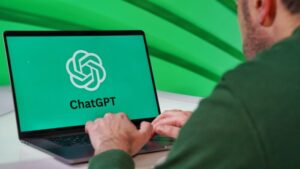
This is the part most financial coverage skips straight past. You are a ChatGPT user — so what does OpenAI going public actually mean for you day-to-day?
Here is the honest answer: probably not much immediately. But over time, it matters.
Once OpenAI is publicly traded, it answers to shareholders not just its board and investors. That means quarterly earnings pressure, pressure to grow revenue faster, and pressure to cut costs. In practice, that usually means one of two things: prices go up, or free tiers get smaller.
Right now, ChatGPT free is genuinely useful. But as we covered in the dark side of ChatGPT, the free version already has limits that push you toward Plus. A public OpenAI with Wall Street watching every quarter has even more reason to shrink what is free and grow what is paid.
| 📌 What to watch: If OpenAI raises its ChatGPT Plus price from $20/month after the IPO, or cuts free tier limits significantly that is the IPO pressure showing up in your app. |
Can You Actually Buy OpenAI Stock?
Not yet and not for certain even after the IPO.
Here is how it works. OpenAI filed confidentially meaning the S-1 document is with the SEC but not public yet. That is standard practice. The document goes public typically 15–30 days before pricing, which means sometime in August or early September 2026 you will see the actual prospectus with all the financials.
After that, trading begins. You will be able to buy through any standard brokerage — Fidelity, Schwab, ETRADE. There is no confirmed ticker yet, but OpenAI is targeting Nasdaq. Some are speculating the ticker will be OAPI but nothing is confirmed.
One important thing: the IPO share price will likely be high. Just like SpaceX is targeting $525–$530 per share, OpenAI is not going to be a cheap entry. And given the losses, this is firmly a bet on the future, not a safe bet on the present.
Why OpenAI, SpaceX and Anthropic Are All Racing Toward IPOs
Here is what makes 2026 genuinely extraordinary in tech history. Three of the most valuable private companies in the world are all going public within months of each other.
- 🚀 SpaceX — listing June 12, $1.75 trillion target (we covered this in detail: SpaceX IPO 2026 guide)
- 🤖 OpenAI — targeting September, $1 trillion valuation
- 🧠 Anthropic — eyeing October 2026 at $900 billion valuation
All three in the same year. Prediction markets give OpenAI an 83% chance of going public before Anthropic a sharp swing from 32% just weeks ago when the Musk lawsuit was still hanging over things.
Speaking of which the Musk vs Altman trial verdict clearing in OpenAI’s favour earlier this month was not just legal news. It removed the last major obstacle to this IPO. Without that verdict, the S-1 filing almost certainly would not have happened this fast.
The Part Wall Street Is Not Talking About Enough
Everyone is focused on the $1 trillion number. Nobody is leading with the fact that OpenAI is forecasting a $14 billion operating loss in 2026 alone.
For comparison, OpenAI’s full year 2025 revenue was $13.1 billion. So it is losing more in one year than it earned in the previous full year. The company does not expect to turn profitable until around 2030.
That is not necessarily a dealbreaker Amazon lost money for years before it became the most dominant company in e-commerce. But it does mean the valuation is entirely built on what OpenAI might become, not what it is today.
And the competition is getting sharper. Gemini has gone from near-zero to 21.5% AI market share in one year. AI tools are multiplying faster than any one company can dominate. The moat OpenAI built with ChatGPT is real — but it is not permanent.
If you want to understand how all this AI competition plays out in the real world — including what it means for jobs and careers we have been covering that closely too.
FAQ — OpenAI IPO 2026
1. When can I buy OpenAI stock?
The earliest is September 2026, assuming everything goes to plan. The confidential S-1 needs to go through SEC review, then a public filing, then a roadshow, then pricing that process typically takes 3–4 months. Mark September as the earliest realistic date. November is more likely if there are any delays or market volatility.
2. Is OpenAI profitable — should I invest?
OpenAI is not profitable. It lost approximately $9 billion in 2025 and is forecast to lose $14 billion in 2026. Revenue is growing fast $25 billion annualised as of early 2026 but costs are growing faster. Whether to invest depends entirely on whether you believe OpenAI can grow into its valuation by 2030 when it targets profitability. That is a long bet. Not necessarily a bad one, but definitely not a safe one. As always do your own research and speak to a financial advisor before investing.
3. What happens to ChatGPT after the IPO?
It keeps working nothing changes on day one. But longer term, a public OpenAI has shareholder pressure that a private one does not. Expect ChatGPT pricing to increase gradually, free tiers to shrink, and enterprise features to get prioritised over consumer ones. The product that made OpenAI famous may start to feel different once Wall Street is watching the quarterly numbers.
| 💬 Over to You: Would you buy OpenAI stock when it lists or do you think $1 trillion is too much for a company losing $14 billion a year? And do you think ChatGPT will get worse once OpenAI has shareholders to answer to? Drop your honest take in the comments we read every single one. |
techsunnews.com | Tech / AI / Business | © 2026




One thought on “OpenAI Is Going Public, What the $1 Trillion IPO Means for You”