
● Nandini Roy Choudhury, writer
TECH • ARTIFICIAL INTELLIGENCE • LABOR RIGHTS • CHINA
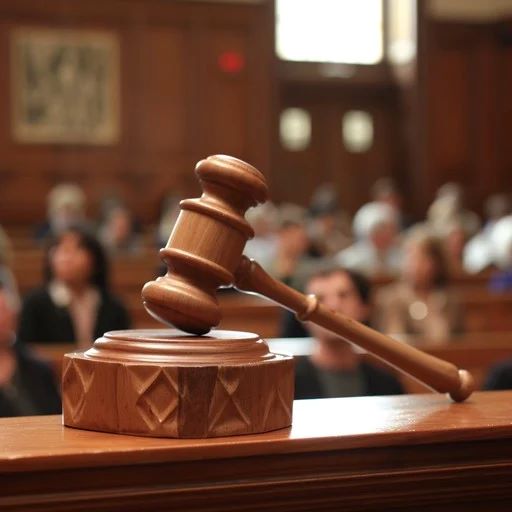
Chinese courts have ruled that AI adoption is NOT legal grounds for dismissal — making China the first major economy to explicitly protect workers from being fired simply because a machine can do their job for less. The ruling came from the Hangzhou Intermediate People’s Court and has been upheld on appeal. Meanwhile, 78,000 US tech workers lost their jobs to AI in early 2026. No equivalent law exists in the US, UK or Europe.
May 4, 2026 • By World Affairs Desk, techsunnews.com • 10 min read • Sources: NPR, Bloomberg, Fortune, The Next Web, Tom’s Hardware, Caixin Global
AI JOB DISPLACEMENT DASHBOARD — May 2026
| US tech layoffs
78,000 In early 2026 — AI cited |
Zhou’s pay cut
40% 25K → 15K yuan/month |
Court verdict
Illegal Both courts upheld |
West’s response
Zero laws No equivalent protection |
KEY POINTS
|
[AD UNIT 1 — Place leaderboard or in-article ad here]
Zhou’s story — the case that changed everything
In November 2022, Zhou joined a technology company in Hangzhou, Zhejiang province, as a quality assurance supervisor. His job was to work directly with AI large language models — matching user queries, optimising outputs, filtering sensitive or illegal content and ensuring the AI produced accurate, safe results. He was, in other words, the human layer that made the AI work properly. He earned 25,000 yuan per month, roughly $3,640. It was skilled, specialised work.
By 2024, the company decided its AI systems had improved enough to make Zhou’s role redundant. It offered him a reassignment to a lower-level position at 15,000 yuan per month — a 40% pay cut. Zhou refused. The company fired him, citing “reductions in staffing due to AI.” It offered a severance package worth around $45,000. Zhou said it was not enough. He filed for arbitration, arguing the dismissal was illegal. The arbitration panel agreed. The company sued in district court. The district court sided with Zhou. The company appealed to the Hangzhou Intermediate People’s Court. That court upheld the ruling. Zhou won at every stage.
“The termination grounds cited by the company did not fall under negative circumstances such as business downsizing or operational difficulties, nor did they meet the legal condition that made it ‘impossible to continue the employment contract.’”
— Hangzhou Intermediate People’s Court ruling, April 28, 2026
What the court actually decided — and why it matters globally
The legal heart of the case was whether AI-driven restructuring constitutes what China’s Labor Contract Law calls a “major change in objective circumstances.” This is the legal threshold that allows a company to terminate a contract when something truly unforeseeable makes the employment relationship impossible to continue — think factory fires, natural disasters, government shutdowns. The company argued that AI replacing Zhou’s role qualified.
The court rejected this argument entirely. Adopting AI, the judges said, is a voluntary strategic business decision — not an uncontrollable external event. When a company chooses to automate, it is making a deliberate choice to cut costs. The risks of that choice, the court ruled, cannot simply be transferred onto the workers whose jobs are being eliminated. The company chose AI. The company bears the consequences. The ruling also found that the replacement role offered to Zhou came with such a severe pay reduction that it could not reasonably be considered a fair reassignment.
[AD UNIT 2 — Place mid-article ad here]
China vs the West — the starkest contrast in AI policy
HOW CHINA AND THE WEST TREAT AI-DRIVEN LAYOFFS
| Issue | China ✅ | US / EU ❌ |
|---|---|---|
| AI dismissal | Ruled illegal — voluntary business decision | No federal law protecting workers |
| Pay cuts for AI role | Must be reasonable — 40% cut ruled unfair | No legal limit on salary reductions |
| Worker compensation | Full compensation required — courts enforce | Severance negotiable, often minimal |
| Legal precedent | Two separate cases upheld across courts | Zero cases ruled in workers’ favour |
| Government position | National policy includes AI employment impact | No equivalent national policy exists |
| Tech layoffs 2026 | Courts actively protecting workers | 78,000 fired — AI cited, no recourse |
The contrast is stark. In the United States, 78,000 tech workers lost their jobs in early 2026, with nearly half of those layoffs attributed to AI automation. Companies including Microsoft, Google, Meta and Amazon cut thousands of employees while simultaneously announcing hundreds of billions in new AI spending. In every case, the workers had limited legal recourse under existing laws. The companies were entirely within their rights. US employment law does not recognise AI adoption as anything other than normal business operation.
In Europe, the EU AI Act — which took full effect in August 2026 — regulates how AI is used in employment decisions. It does not regulate whether a company can eliminate positions because of AI. The European Trade Union Confederation has called for stronger protections. Legal scholars have proposed an AI Social Compact. None of these proposals have been enacted. The gap between China’s courts and the West’s silence is not a question of awareness. It is a question of political will.
The Klarna lesson — when AI replaces workers and then fails
The most instructive recent case study is not from China. It is from Sweden. In 2024, Klarna fired 700 customer service workers and replaced them with an AI chatbot. The move was celebrated in financial media as a triumph of automation. By 2026, Klarna had quietly begun rehiring human agents after repeat contacts jumped 25% and customer satisfaction deteriorated on complex interactions. The CEO publicly admitted the strategy had failed. The workers who had been fired got no guaranteed compensation, rehiring priority, or additional legal protection. China’s courts would have handled that differently.
WHAT DO YOU THINK? CHINA SAYS FIRING WORKERS BECAUSE OF AI IS ILLEGAL. THE US AND EUROPE HAVE NO SUCH LAW. 78,000 AMERICAN TECH WORKERS LOST THEIR JOBS TO AI IN 2026. SHOULD THE US PASS A LAW PROTECTING WORKERS FROM AI LAYOFFS — OR SHOULD COMPANIES BE FREE TO AUTOMATE? DROP YOUR ANSWER IN THE COMMENTS BELOW! 👇
[AD UNIT 3 — Place ad before FAQ section]
Frequently asked questions
Did China make it illegal to fire workers because of AI?
Not through a specific law — but through court rulings that now set precedent. The Hangzhou Intermediate People’s Court ruled that a company’s decision to adopt AI is a voluntary business choice, not an unforeseeable event, and therefore cannot legally justify terminating an employment contract. A second Beijing arbitration case reached the same conclusion. These rulings create legal precedent that companies must follow.
What happened to Zhou — the worker at the centre of the case?
Zhou was a quality assurance supervisor at a Hangzhou tech company earning 25,000 yuan ($3,640) per month. When AI replaced his role, the company cut his pay by 40% to 15,000 yuan and reassigned him to a lower position. He refused and was fired. He contested his dismissal through arbitration, won, and the company appealed all the way to the Hangzhou Intermediate People’s Court — where Zhou won again. He received full wrongful dismissal compensation.
Do US workers have any protection against AI layoffs?
Currently no.In the United States, there is no federal law preventing a company from eliminating positions because of AI automation. AI-driven layoffs are treated as normal business restructuring. Workers receive standard severance per their employment contracts — and have no additional legal recourse. In 2026, 78,000 US tech workers lost their jobs to AI with no legal protection.
What does India’s labor law say about AI-driven dismissals?
India does not currently have specific legislation governing AI-driven dismissals. Indian labor law provides some protections against arbitrary termination under the Industrial Disputes Act and similar statutes — but these have not been tested specifically against AI automation claims. As AI adoption accelerates in India’s IT sector, the question of whether AI replacement can constitute illegal dismissal is likely to reach Indian courts within the next 2–3 years.
SOURCES — 8 verified global portals
1. NPR — A tech worker in China is laid off and replaced by AI. Is it legal? (May 1, 2026)
2. Bloomberg — Chinese Court Rules Firms Can’t Lay Off Workers on AI Grounds (May 2, 2026)
3. Fortune — Chinese court rules firms can’t lay off workers on AI grounds (May 3, 2026)
7. Futurism — Chinese Court Rules That a Worker Cannot Be Replaced by AI (May 2026)
8. China.org.cn — Chinese court defends labor rights in new AI-replacement case (Apr 30, 2026)
| DISCLAIMER: This article is based on 8 verified global sources as of May 4, 2026. The Chinese court rulings cited are from verified court statements published by the Hangzhou Intermediate People’s Court and the Beijing Municipal Bureau of Human Resources. Labor law details for the US, EU and India are general summaries and may vary by jurisdiction. This article does not constitute legal advice. |





3 thoughts on “China Rules: Your Boss Cannot Fire You Just Because AI Is Cheaper — No Western Country Has Done the Same”