
Anamika Dey, editor
By TechSun News Desk | techsunnews.com | July 5, 2026 | Tech / AI / Business | 5 min read 💰
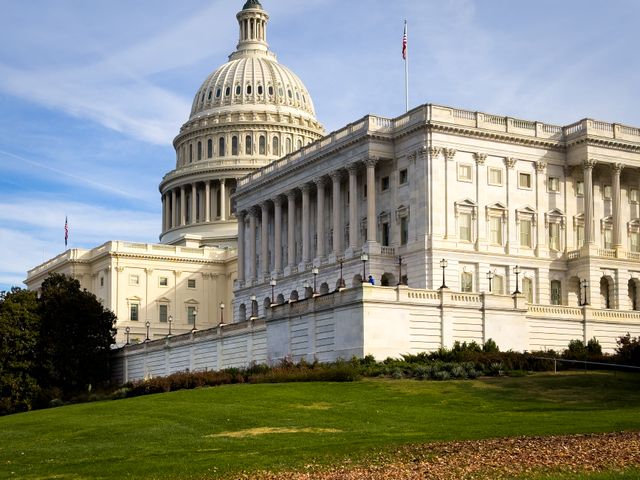
Sam Altman has reportedly offered something that would have seemed unthinkable just a few years ago: a slice of OpenAI — worth an estimated $42.6 billion — to the US government. No purchase required. Just given.
According to the Financial Times, which broke the story on July 2, Altman has been in early discussions with the Trump administration about handing the government a 5% equity stake in OpenAI. Bloomberg, CNBC, CNN, and Reuters all confirmed the report within hours.
Nothing has been agreed. The proposal is, in the FT’s words, at an “early, conceptual stage.” But the fact that it’s being discussed at all — directly between Altman, President Trump, Commerce Secretary Howard Lutnick, and Treasury Secretary Scott Bessent — says something significant about where AI and government are heading.
What Exactly Is Being Proposed
The structure Altman is reportedly floating goes well beyond OpenAI alone.
The idea, according to the Financial Times, is that the leading US AI companies — OpenAI, Google, Anthropic, and Meta — would each contribute 5% of their equity into a government-managed vehicle modelled on the Alaska Permanent Fund. That fund, created in 1976, takes a portion of the state’s oil revenues, invests them, and pays an annual dividend to every Alaskan resident. Altman is reportedly proposing AI companies do the same thing — but with equity instead of oil money.
At OpenAI’s current valuation of $852 billion — set during a record-breaking funding round in March 2026 — a 5% stake would be worth roughly $42.6 billion. That’s more than the US government paid for its entire position in Intel last year, and under Altman’s reported proposal, it would be a gift rather than a purchase. (Source: CNBC)
President Trump told reporters aboard Air Force One that such an arrangement “almost becomes a partnership with the American public.” The White House did not formally confirm or comment on the details.
Why Is OpenAI Doing This?
Two reasons are being discussed — and they’re not mutually exclusive.
The public-benefit case: Altman has argued for over a year that as AI generates trillions of dollars in value, ordinary people — not just investors — should have a financial stake in it. In April 2026, OpenAI published a white paper proposing a “public wealth fund” that would let every American benefit from AI-driven growth. The Alaska analogy is central to this: oil made Alaska wealthy, but the state ensured residents shared in that wealth. Altman wants AI to work the same way.
The political pressure case: CNBC’s framing of the same story was notably blunter — reporting that the proposal was designed to “address political blowback” in Washington. OpenAI has faced growing scrutiny from both parties over AI safety, market concentration, and the question of who benefits from AI’s economic upside. A government equity stake would give Washington a financial incentive to want OpenAI to succeed — rather than regulate it into difficulty.
Senator Bernie Sanders, who has been pushing a far more aggressive proposal — a 50% one-time equity tax on major AI firms that could build a fund worth $7 trillion and pay every American over $1,000 a year — has reportedly met with Altman in recent weeks. The gap between 5% and 50% is enormous. But both sides now agree on the underlying question: as AI creates unprecedented wealth, who owns the gains? (Source: Moneywise)
What This Would Actually Change
If the proposal moves forward, the implications go well beyond OpenAI’s ownership structure.
For AI regulation: A government that owns equity in OpenAI has a financial incentive to see it thrive. That could make Washington more cautious about imposing restrictions that damage the company’s value — which is precisely what happened when the administration shut down Anthropic’s Fable 5 for 19 days before reversing the decision. We covered that episode in our piece on Anthropic’s Fable 5 ban and return.
For the broader AI industry: The proposal reportedly covers Google, Anthropic, and Meta too — not just OpenAI. None of those companies have publicly agreed. Anthropic told CNBC that no government stake discussions have taken place. Google and Meta have not commented. Asking private companies with their own investors to hand over 5% of their equity without compensation is a significant ask.
For the US-China AI race: A government that benefits financially from US AI companies’ success has a clearer incentive to support them — through export controls, regulatory flexibility, and infrastructure investment. As we covered in our piece on how Trump’s AI crackdown may be giving China an opening, the current approach of restricting US AI models has drawn criticism. A co-ownership model would represent a very different strategy.
For everyday users: If the fund works as Altman describes — paying dividends to citizens from AI profits — it could eventually mean a check in the mail from ChatGPT’s success. But that outcome is speculative, distant, and depends on details that haven’t been worked out. Any deal would likely require an act of Congress. (Source: CNN)
Has the Government Done This Before?
Closer than most people realise.
In August 2025, the US government took a 10% stake in Intel — worth $8.9 billion — funded through remaining CHIPS Act grants and Secure Enclave program funds. Nvidia and AMD separately agreed to hand over 15% of their China AI chip revenue in exchange for export licences, with Nvidia’s rate later rising to 25% on its H200 chips. (Source: InvestorIdeas)
The OpenAI proposal is different in one important respect: those were exchanges — equity or revenue for government money or market access. What Altman is reportedly proposing is closer to a voluntary transfer. OpenAI would give the government a stake without receiving funding in return. Whether that makes it more politically viable or less is an open question.
| 🟡 EDITOR’S OBSERVATION
The most revealing detail in this story isn’t the $42.6 billion figure. It’s that Altman has reportedly been pitching this idea since early 2025 — well before the Fable 5 shutdown, before the GPT-5.6 restrictions, before Washington started taking a harder line on frontier AI releases. Either Altman saw this coming a long time ago, or he helped create the political conditions that made the offer seem reasonable. Probably both. The question now is whether Google, Anthropic, and Meta will follow — and whether Congress has any appetite to build the legal framework to make it work. |
💬 WE WANT TO HEAR FROM YOU
| Should the US government accept a 5% stake in OpenAI and other AI companies?
A) Yes — the public should share in AI’s financial upside B) No — government ownership of private companies creates conflicts of interest C) Only if it leads to actual dividends for every citizen Tell us in the comments — this is one of the biggest AI policy debates of 2026. |
❓ FREQUENTLY ASKED QUESTIONS
| Q: Has this deal actually been agreed?
No. The Financial Times reported on July 2, 2026 that discussions are at an “early, conceptual stage,” based on two people familiar with the talks. OpenAI declined to comment officially. The White House did not respond to media requests. Bloomberg, CNBC, CNN, and Reuters confirmed the FT report, but Reuters noted it could not independently verify the story. Any formal arrangement would likely require an act of Congress. This is a proposal under discussion — not a signed deal. |
| Q: What is the Alaska Permanent Fund and why does it matter here?
The Alaska Permanent Fund was created in 1976 to ensure Alaskans benefited from the state’s oil revenues. It takes a portion of oil income, invests it in stocks, bonds, and real estate, and pays an annual dividend to every Alaska resident — including children. In 2023, that dividend was $1,312 per person. Altman is reportedly using this as the model for an AI wealth fund: instead of oil, the revenue source would be equity stakes in the leading US AI companies, distributed as dividends to the American public. |
| Q: Would Google, Anthropic, and Meta have to participate too?
Under the proposal as reported, yes — the framework envisions all leading US AI developers contributing 5% equity, not just OpenAI. However, none of those companies have agreed. Anthropic specifically told CNBC that no government stake discussions have taken place on their end. Google and Meta have not commented publicly. Whether this becomes a voluntary arrangement, a negotiated deal, or requires legislation — and whether any of these companies would ultimately participate — remains entirely open. |
Disclaimer: This article is based on reporting by the Financial Times (original source), CNBC, Bloomberg, CNN, Reuters, Moneywise, InvestorIdeas, and AI Weekly. The proposal described is at an early, conceptual stage and has not been confirmed by OpenAI or the White House. All figures reflect information available as of July 5, 2026.





2 thoughts on “OpenAI Wants to Give the US Government a $42 Billion Stake — Here’s What That Means for You”