

Nandini Roy Choudhary, writer
By TechSun News Desk | techsunnews.com | July 1, 2026 | Tech / Business | 5 min read
Your next MacBook costs more than it did a year ago. So does an Xbox. And if you’re planning to buy a new laptop or tablet anytime soon, you’re going to feel it.
The reason isn’t tariffs this time. It isn’t inflation, exactly. It’s something most people have never thought about — and it starts inside an AI data center.
The world is running short on memory chips. Not the flashy AI processors you’ve heard about. The boring, everyday ones that go inside every laptop, phone, and gaming console on the planet. And the companies hoarding them aren’t Samsung or Apple. They’re Microsoft, Google, Meta, and Amazon.
What Even Is a Memory Chip? 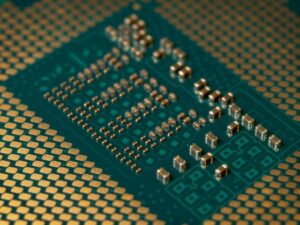
Here’s the simple explanation: there are two main types of memory that make your devices work.
DRAM (Dynamic Random Access Memory) is what your device uses to think — running apps, switching between tabs, processing things in real time. NAND flash is storage — where your files, photos, and apps actually live.
Every laptop has both. Every phone has both. Every gaming console has both. You can’t build a device without them.
Now add AI to the picture. Every AI server — the kind that runs ChatGPT, Gemini, or Copilot — needs a completely different type of memory called HBM (High-Bandwidth Memory). It’s faster, more expensive, and built specifically for the kind of calculations AI models run constantly.
Here’s the problem. Samsung, SK Hynix, and Micron — the three companies that make virtually all the world’s memory chips — can only produce so much. And right now, they’ve pointed almost everything they’ve got toward AI.
The Data Behind the Shortage
This isn’t speculation. The scale of the shift is genuinely staggering.
Data centers will consume 70% of all memory chips produced worldwide in 2026, according to IDC research cited by Tom’s Hardware. Back in 2022, that number was around 20–30%. (Source: Bloomberg)
DRAM prices have quadrupled over the past three quarters, according to Counterpoint Research. (Source: CBC News)
Samsung, SK Hynix, and Micron have collectively shifted 93% of their production toward HBM for AI data centers — leaving almost nothing for consumer devices. (Source: IDC)
Big tech companies are on track to spend $650 billion on AI infrastructure in 2026 — up 80% from last year’s already record spending. That demand isn’t going anywhere.
IDC called it bluntly: this is not a normal cyclical shortage. It’s a structural reallocation of the entire industry.
What Apple and Microsoft Are Actually Doing About It
Both companies have been remarkably candid about how bad this is getting.
Apple raised prices on select MacBook and iPad models by up to $300 — increases of roughly 18–25% on affected models, according to Cryptobriefing. CEO Tim Cook called the increases “unavoidable” during a June 17 interview, warning the shortage would compress iPhone margins too.
Apple is also reportedly lobbying the Trump administration for permission to source chips from China’s CXMT — a company currently on the Pentagon’s military blacklist. That highlights how tight the supply situation has become.
Microsoft followed with Xbox console price increases of $100 to $150, taking effect August 1, 2026. Microsoft CFO Amy Hood disclosed a $25 billion impact from higher component prices in the company’s 2026 capex projections. (Source: CNBC)
And it’s not just Apple and Microsoft. Meta’s capex forecast ballooned from $135 billion to $145 billion partly because of memory costs. Tesla’s Elon Musk said the company might have to build its own memory fabrication plant.
Even Google DeepMind’s Demis Hassabis weighed in, calling the memory shortage a “choke point” for the entire AI industry.
How Does This Connect to AI?
Here’s a simple example. Every time someone asks ChatGPT a question, or uses Microsoft Copilot to write an email, or runs a search through Google’s AI — a server somewhere processes that request. That server needs memory. A lot of it.
The newer the AI model, the more memory it needs. We covered how OpenAI’s GPT-5.6 introduced ‘ultra mode’ — where the model runs multiple sub-agents simultaneously to solve complex tasks. Each of those agents needs its own memory allocation.
Meanwhile, agentic AI systems — which can take actions across apps and services without human input — are even more memory-hungry than standard chatbots. The more capable AI gets, the worse the chip pressure becomes.
As AI systems become more capable, they require more memory. That increases demand for chips, pushes prices higher, and eventually raises the cost of consumer devices.
When Does It Get Better?
The short answer is no.
Micron’s CEO Sanjay Mehrotra said the company does not currently have visibility into when supply will catch up with demand. Tight conditions are expected to persist beyond 2027, with possible gradual improvement starting in 2028 as new factories come online. (Source: CBC News)
Micron is expanding US manufacturing in Idaho, New York, and Virginia. But building a new chip factory takes years, not months.
The smartphone market is facing what IDC calls the biggest shipment decline in over a decade — directly because of this. Fewer affordable chips means fewer affordable phones.
| 🟡 WHAT THIS MEANS FOR YOU
If you’re planning to buy a MacBook, iPad, Xbox, or a new laptop this year — buy sooner rather than later. Prices are already up and analysts aren’t predicting relief before 2028. This is one of those rare moments where waiting actually costs you more. |
💬 WE WANT TO HEAR FROM YOU
| Have you already noticed tech products getting more expensive this year?
A) Yes — I paid more for a device recently B) Not yet, but I’m worried C) I had no idea this was happening Tell us in the comments — and share this with anyone planning a tech purchase this year. |
❓ FREQUENTLY ASKED QUESTIONS
| Q: Why are memory chips suddenly so expensive?
AI data centers are consuming an unprecedented share of global chip production. Samsung, SK Hynix, and Micron have shifted around 93% of their combined output toward High-Bandwidth Memory (HBM) for AI servers — leaving very little for the consumer-grade DRAM and NAND flash that goes into laptops, phones, and consoles. When supply drops and demand stays high, prices go up. DRAM prices have roughly quadrupled since mid-2025. |
| Q: Will Apple and Microsoft lower prices again once the shortage eases?
History suggests probably not quickly. Tech companies rarely cut prices once customers have accepted a new baseline. Even if chip costs drop in 2028, companies are more likely to absorb the margin improvement than pass it back to buyers — unless there’s serious competitive pressure. The better bet is to watch for promotional pricing or older model discounts once new lineups launch. |
| Q: Is this the same chip shortage we heard about during COVID?
Similar situation, very different cause. The COVID-era shortage was a demand spike — everyone bought devices at the same time and factories couldn’t keep up. This one is structural. Chipmakers have actively redirected production away from consumer devices toward AI infrastructure. IDC says this isn’t cyclical — it’s a permanent strategic shift in how the industry allocates its capacity. That makes it harder to fix and longer-lasting than what we saw in 2021–2022. |
Disclaimer: This article draws from reporting by Bloomberg, CNBC, CBC News, IDC, Counterpoint Research, Cryptobriefing, and Tom’s Hardware. All figures reflect information available as of June 30, 2026.
You Might Also Like

 To combat frauds, Facebook’s owner Meta strikes a data-sharing agreement with UK banks.
 Google Just Had Its Best Month Since 2004 — Alphabet Stock Surged 34% in April, Adding $1.2 Trillion in Market Value



4 thoughts on “How the Global Memory Chip Market Is Hitting Apple, Microsoft, and Your Wallet”