
Anamika Dey, editor
By TechSun News Desk | techsunnews.com | August 31, 2026 | Tech / Trending / Finance | ~8 min read
What This Article Covers
|
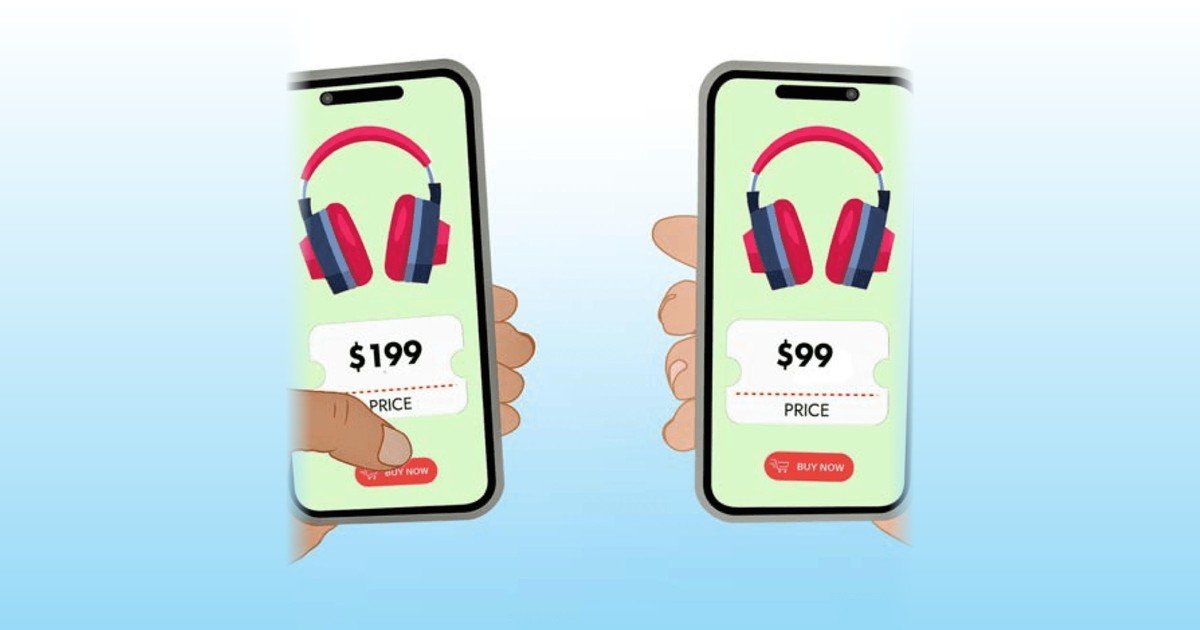
Two people sit on the same couch, shopping for the same flight on the same night. One is signed in on a three-year-old laptop with a long history of booking at the last minute. The other is in a fresh incognito window. The fares don’t match — and neither of them can quite say why.
That gap is what people are pointing at when they say surveillance pricing. It’s the quiet possibility that the number on your screen wasn’t set for the product, but for you. And it’s one of those phrases that sounds like a conspiracy right up until you read a federal study, at which point it starts to sound a lot more like a Tuesday.
So what is it, exactly?
Start with what it isn’t, because the confusion here is doing real work.
Dynamic pricing is the thing you already know. Airline fares that climb as seats sell, hotel rooms that cost more on a holiday weekend, rideshare surge when everyone leaves the stadium at once. It moves with supply and demand — and this is the key part — everyone standing in the same spot at the same moment sees roughly the same price. It’s old, it’s legal, and it isn’t really about you.
Surveillance pricing is narrower and newer. Instead of reacting to the market, it reacts to you specifically: your location, your device, what you’ve browsed, what you’ve bought before, rough guesses about your income or household, sometimes even how your cursor moves across a page. That profile helps decide the price or discount you personally see. The FTC has described it as intermediaries using algorithms, AI and personal data to sort people into buckets and set a targeted price. Same product, different shopper, potentially different number.
How it actually works
In 2024 the FTC went looking under the hood. It opened a study — the wonky name is a 6(b) study — sent orders to eight companies that build or use these pricing tools, and published an initial set of staff findings in January 2025 under then-chair Lina Khan.
What staff described was less a smoking gun than a very well-built machine. Behavior as small as the movement of your mouse on a page, or the items you leave sitting unbought in a cart, can be tracked and fed into pricing systems. The inputs named in the FTC’s work included location, demographics, browsing patterns, shopping history, even credit history. The study focused on the middlemen — firms like Mastercard, Accenture, PROS, Bloomreach, Revionics and McKinsey were among those whose documents staff reviewed — because retailers often don’t do this in-house. They hire vendors who specialize in it.
Here’s the honest caveat, and it matters for a topic this easy to hype: what’s documented is the capability and the data plumbing, not a running tally of shoppers who provably overpaid. The clearest recent flashpoint — a Consumer Reports look at grocery-app pricing that pushed Instacart to end certain item-price experiments — came with an asterisk, because Consumer Reports itself noted the behavior it caught didn’t neatly fit the strict definition. So the pipes are real and well-mapped. Clean, proven cases of “you specifically were charged more for the identical item” are still thinner than the headlines suggest. Both things are true at once.
Dynamic vs. surveillance pricing, side by side
If you only remember one distinction, make it this one.
| How to tell them apart | Dynamic pricing | Surveillance pricing |
|---|---|---|
| What moves the price | Supply, demand, timing | Your personal data and profile |
| Who sees the change | Everyone in the same situation | Potentially just you |
| Everyday example | Surge fares, holiday hotel rates | A price shaped by your history or location |
| How new is it | Decades old | Newer, and largely unregulated |
Where you’ll actually run into it
Nobody sends you a receipt that says “personalized.” But there are a few places the practice tends to come up.
Travel is the classic suspect — flights and hotels have been accused of it for years, though it’s notoriously hard to prove from the outside. Delivery and rideshare apps are a newer front; the grocery-app experiments above are the most concrete example so far. The advocacy group Consumer Watchdog ran a small test of its own: it ordered two Lyft rides with the same start, end, and route, and found one rider charged about $5 more than the other, with no obvious explanation for the gap. It’s a single test by an advocacy group, not proof of a systemic pattern — but it’s the kind of result that keeps the question alive. Straight online retail is where most of the FTC’s cart-tracking and location-based findings sit — the store quietly adjusting what you see based on where you are and what you’ve done before.
Insurance and financial services get raised a lot too, and here I’d pump the brakes. Those industries already run on risk-based pricing, which is regulated and is a genuinely different thing from tailoring a price to squeeze out what a data profile says you’ll tolerate. The worry regulators have flagged is data-driven personalization drifting into those spaces — but that’s a live concern being watched, not a settled, documented practice. Worth naming, not worth overstating.
Why regulators are worried — and who’s actually acting
So is anyone doing anything about it? Sort of — just not where you’d expect.
At the federal level, the momentum has cooled. The FTC’s study was still described as ongoing well into 2026, but the aggressive posture it started under didn’t carry forward at the same pace, and Washington has been comparatively quiet. The action moved to the states, and the states have not moved in one direction.
New York got there first: its Algorithmic Pricing Disclosure Act took effect in July 2025 and leans on disclosure — telling you when a price is personalized rather than banning the practice. Maryland passed its own measure in 2026, though Consumer Reports argued it fell short. New Jersey became the third state to curb personalized pricing in July 2026. California, characteristically, went bigger: AB 2564, introduced by Assemblymember Christopher Ward in February 2026, would bar retailers from using personal data to set individualized prices while carving out transparent discounts like loyalty and group deals. It passed the state Assembly on May 27, 2026 and headed to the Senate — meaning, as of now, it’s a bill, not a law, and everything about it stays conditional until that changes. Separately, California’s attorney general announced a sweep on Data Privacy Day 2026 examining whether personalized pricing runs afoul of the state’s existing privacy law. Connecticut and Colorado have moved bills of their own.
The through-line: some states want disclosure, some want an outright ban, and the map is getting patchier by the month. That patchwork is a problem in itself — the same checkout can be treated very differently depending on which state you’re sitting in.
What you can actually do about it
You can’t fully opt out of this, and anyone promising otherwise is selling something. But you can shrink the profile that feeds it.
- Shop signed out, or in a private window. It won’t erase you, but it strips away some of the history a tool would otherwise lean on.
- Try the two-browser move: browse and compare in one, buy in another. Low effort, occasionally revealing.
- Clear your cookies before you commit, and try the same purchase with a different ZIP code — location is one of the most common inputs, so it’s the easiest to test.
- A reputable VPN masks your IP and rough location, which are exactly the signals location-based pricing keys on. It’s a useful layer, not a force field — treat it that way.
- Use the privacy rights you already have. Opting out of data “sale” or “sharing” under laws like California’s cuts off some of the fuel these systems run on.
None of this is about beating the system. It’s about not handing it a clean, fully-labeled version of yourself for free.
The data profile doing the work here is the same one we dug into in our piece on whether your phone is really spying on you — worth a read if you want to see where all this personal signal comes from in the first place. And if the broader question of who gets to record and profile you in public is on your mind, the privacy fight over Ray-Ban’s Meta glasses is a good companion.
| The Bottom Line
Surveillance pricing isn’t a hoax, and it isn’t yet an everyday certainty — it sits in the uncomfortable middle. The technology to price you as an individual is real, documented, and for sale. Whether it’s quietly shaping your specific receipts is much harder to confirm, and the rules meant to govern it are being written right now, uneven state by state. The reasonable move isn’t panic. It’s a little friction: fewer breadcrumbs, a couple of habits at checkout, and an eye on which way your state jumps. |
Frequently asked questions
Is surveillance pricing legal?
For now, there’s no federal ban. Some states have started regulating it — a few through disclosure rules, at least one moving toward an outright prohibition — so whether a given practice is allowed can depend heavily on where you live. The legal picture is shifting quickly, so “it depends, and it’s changing” is the honest answer.
Is surveillance pricing just dynamic pricing with a scarier name?
No. Dynamic pricing responds to supply and demand, and everyone in the same situation sees roughly the same price. Surveillance pricing responds to you — your data and profile — so two people can see different prices for the identical item at the same moment. The overlap is real, which is partly why the terms get muddled, but the trigger is different.
Can I actually tell if I’m being shown a surveillance price?
Usually not with certainty, which is a big part of why it unsettles people. You can look for clues — comparing prices across a clean browser, a different device, or a different ZIP code sometimes surfaces a gap — but a difference can also come from ordinary dynamic pricing or a timed promotion. Treat it as a signal to shop around, not proof.
Your turn: Have you ever caught the same item at two different prices and wondered what was really going on? Tell us what you were shopping for — we’re collecting reader examples.
| Editor’s Note
The hardest part of reporting this one was resisting the urge to make it scarier than the evidence supports. The capability is documented and the vendors are real — that part isn’t in dispute. But the leap from “this exists” to “this is happening to you, right now, on this purchase” is exactly the leap the evidence doesn’t yet let us make cleanly. We’ll update this piece as California’s bill and the wider state patchwork develop. — A.D. |
You Might Also Like
 Sanders and AOC: “We Cannot Allow Tech Billionaires to Raise Every American’s Electricity Bill” — New Bill Freezes All AI Data Centers US
 Trump’s ‘Made in America’ Phone Is Actually a Taiwanese Phone in a Gold Suit

One thought on “What Is Surveillance Pricing and How Does It Work?”