| EDITOR NOTES (delete this box and the panel before publishing)
1. Yellow highlighted text = placeholders to fix: the password manager link, the AI scams guide link, and the three screenshots. 2. Click all three bureau links in the table and the FTC links once before publishing, to make sure each page still opens and still matches the steps described. 3. Link this article from your data-breach article, using “freeze your credit” as the anchor text. |
Picture the email. It’s from a company you used once, years ago. It says they recently found unauthorized access to a database holding customer information. Maybe your name is in there. Maybe your date of birth. Maybe your Social Security number.
Most people read it, feel a small knot in the stomach, and delete it.
A credit freeze is one free step you can take after a message like that. It doesn’t touch your credit score, and it makes it harder for someone to open a new loan or credit card in your name. It doesn’t stop every kind of fraud, and we’ll be clear below about what it can’t do.
| A quick note
This guide is for U.S. consumers. Credit bureaus and Social Security numbers are U.S. systems, so the steps below won’t apply if you live elsewhere. |
| What This Article Covers
• What a credit freeze is and why it matters after a breach • What it costs • How to place one at Equifax, Experian and TransUnion • How to lift it when you need credit • Freeze vs. fraud alert vs. credit lock • What a freeze can’t protect you from |
What Is a Credit Freeze?
A credit freeze (also called a security freeze) restricts access to your credit file at the credit bureaus. That matters because lenders often check your credit report when you apply for new credit. If a thief applies using your details, the lender may not be able to access your report, which can stop the application from being approved.
It doesn’t close any accounts and it doesn’t lock your money. Think of it as a locked door on your credit history. You hold the key, and you can open the door whenever you want to apply for something yourself.
Why Freeze Your Credit After a Data Breach?
When a breach leaks your name, date of birth, address and Social Security number, a criminal has most of what a lender asks for. Identity theft often doesn’t look like someone emptying your bank account. It looks like new accounts being opened in your name, and you find out months later when a collection notice arrives.
A breach notification email won’t stop that. A freeze makes it harder. If you’re not sure whether your data was exposed, our guide to checking if your data has been leaked takes about two minutes.
You also don’t need a breach to justify it. The FTC says a freeze is something you can do anytime, for any reason.
Is a Credit Freeze Free?
Yes. Placing a freeze, lifting it and putting it back are all free. Federal law made that the rule in September 2018, and the FTC says a freeze doesn’t affect your credit score.
You’ll also see ads and apps for credit “locks.” That’s a different product, covered below.
Before You Start
Have these ready: your full legal name, current address (and sometimes previous addresses), date of birth and Social Security number. Some bureaus will also ask for an email address or phone number.
Two safety rules. First, type the bureau’s web address yourself or use the official links in this article. Don’t click ads, and don’t click a link in an email or text that offers to “secure your credit.” Scammers love this topic because people are already worried. Second, never give these details to someone who calls or messages you offering to freeze your credit for you.
Save your account details and any confirmation you receive, because you may need them later to manage the freeze.
How to Freeze Your Credit at Equifax, Experian and TransUnion
You need to place a freeze with all three bureaus. A freeze at one doesn’t cover the others. The basic steps are the same at each:
- Go to the bureau’s official freeze page (links in the table below).
- Create an account or sign in.
- Verify your identity.
- Choose the option to place a security freeze.
- Save the confirmation, and check that your account shows the freeze as active.
| Bureau | Official freeze page | What you’ll do |
|---|---|---|
| Equifax | equifax.com/personal/credit-report-services/credit-freeze | Create or sign in, verify identity, place freeze |
| Experian | experian.com/help/credit-freeze | Create or sign in, verify identity, place freeze |
| TransUnion | transunion.com/credit-freeze | Create or sign in, verify identity, place freeze |
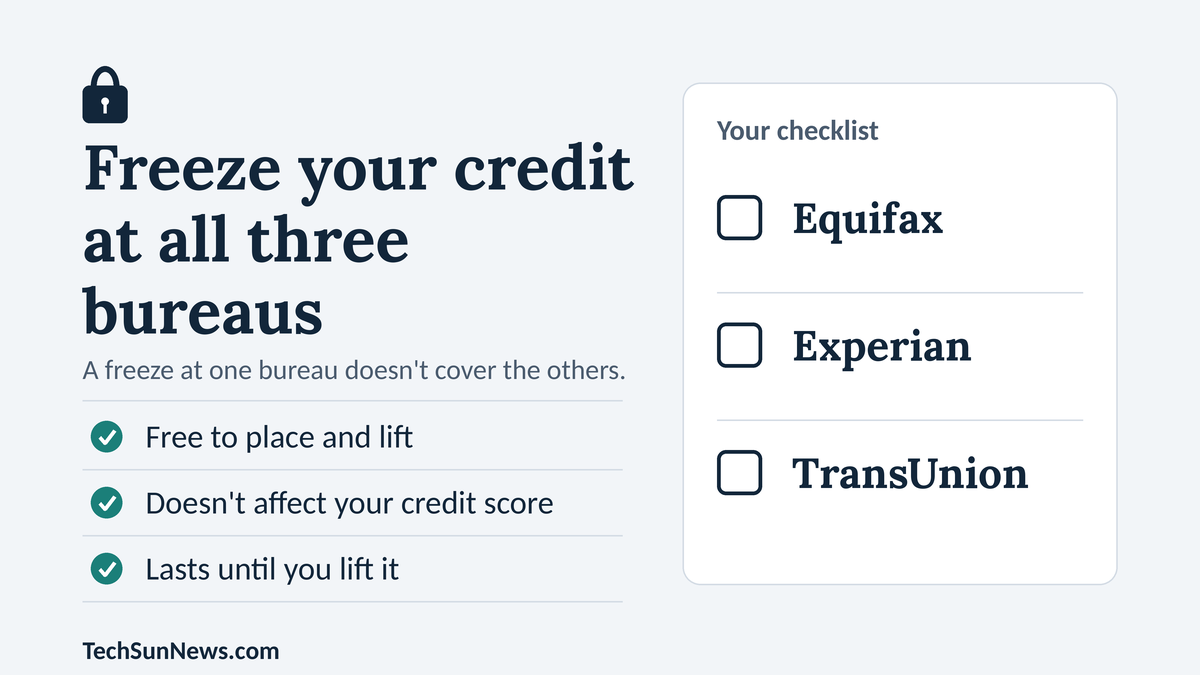
Each bureau has its own account and its own identity questions, so expect to repeat the process three times. Their screens change from time to time, so follow the on-screen prompts instead of memorizing buttons. You can usually also freeze by phone or mail, but check each bureau’s page for current details.
The FTC says online or phone requests to place a freeze must be completed within one business day.
How to Temporarily Lift a Credit Freeze
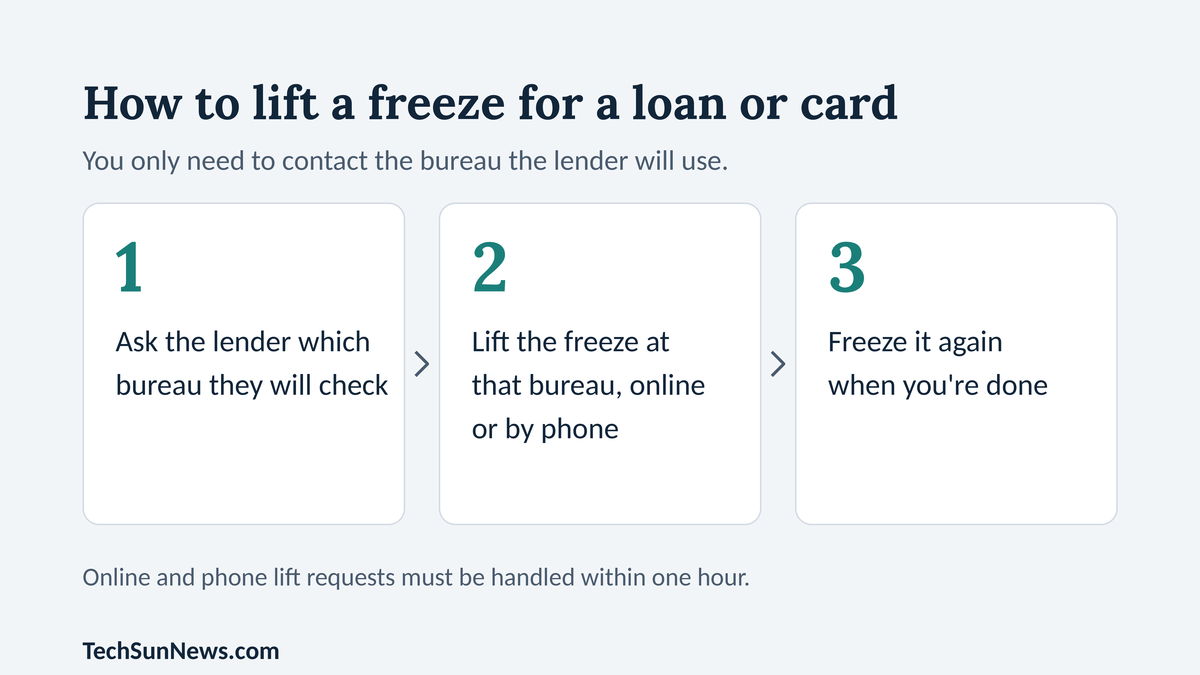
When you apply for a credit card, car loan or mortgage, the lender will check your credit, so you need to open the door for a while.
Ask the lender which bureau they’ll use, then lift the freeze at that one. The FTC says you only need to contact the bureau the lender will use, not all three. Online and phone requests to lift a freeze must be handled within one hour. Mail requests can take up to three business days. When you’re done, freeze it again.
Credit Freeze vs. Fraud Alert
These two get mixed up all the time.
| Credit freeze | Fraud alert | |
|---|---|---|
| What it does | Restricts access to your credit file | Tells lenders to verify your identity before opening new credit |
| Cost | Free | Free |
| How long it lasts | Until you remove it | One year, renewable; seven years (extended alert) for identity theft victims |
| Where to place it | All three bureaus | One bureau, which notifies the other two |
The FTC describes a freeze as the best way to protect against new accounts being opened in your name. A fraud alert doesn’t block anything, it asks lenders to check with you first. You can use both together, especially if you’ve already been a victim.
Credit Freeze vs. Credit Lock
Bureaus and some apps also offer credit “locks.” A lock is a separate service, and its availability, features and terms can vary by bureau and change over time. A credit freeze is the free security-freeze option provided under federal law.
When the free-freeze law took effect, the FTC pointed out that if you want a free freeze guaranteed by federal law, you should choose a freeze, not a lock. If an app offers you a lock, read the terms and check for fees before you sign up.
What a Credit Freeze Does and Doesn’t Protect You From
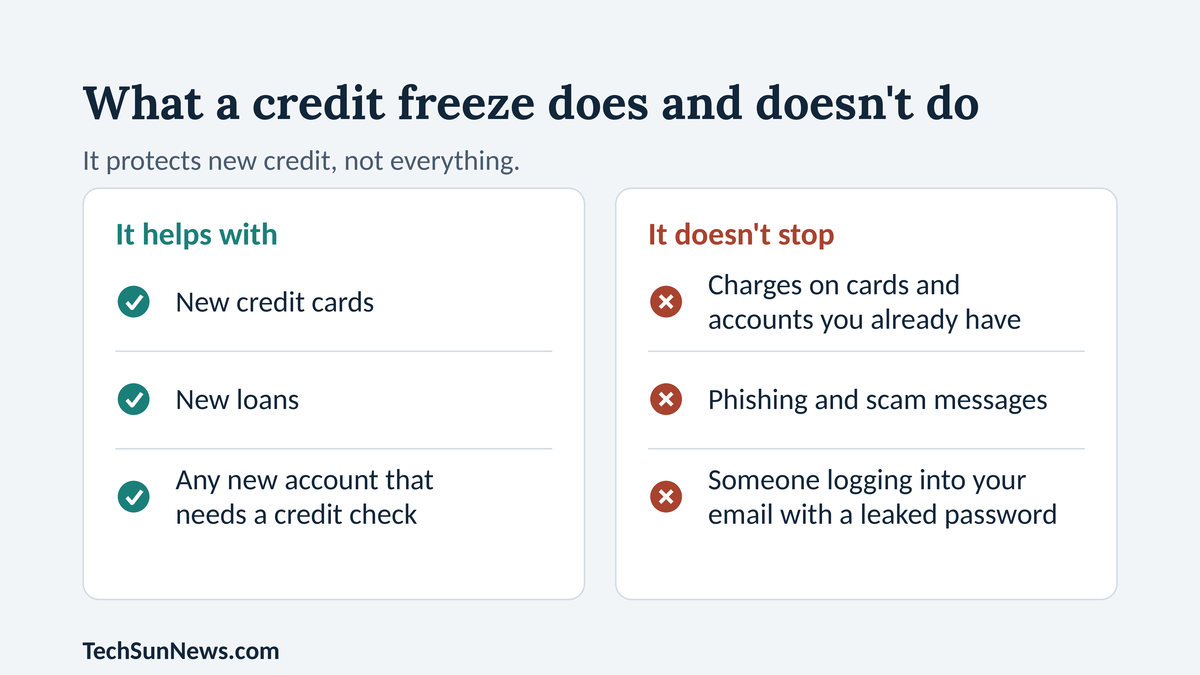 It helps with new accounts. If someone tries to open a new credit card, loan or account that needs a credit check in your name, a freeze makes that much harder.
It doesn’t do much about the rest. It won’t stop someone from using an existing card number or bank account you already have. It won’t stop phishing messages, and it won’t stop someone from getting into your email if your password leaked. Companies you already do business with may still be able to access your file in some cases.
A freeze is only one layer of protection. You still need unique passwords (a password manager makes that realistic), two-factor authentication, and caution with unexpected messages like the ones in our guide to AI scams.
Can You Freeze a Child’s Credit?
Yes. The FTC says children under 16 can get a free freeze too. Parents or guardians usually have to prove their relationship to the child, so check each bureau’s instructions first. It’s worth doing if a family member’s data was part of a breach, because a child’s credit file can go unchecked for years.
What to Do After Identity Theft
If you think someone has already used your identity:
- Report it at IdentityTheft.gov to get a personal recovery plan.
- Place a freeze, and consider an extended fraud alert.
- Check your credit reports for accounts you don’t recognize. AnnualCreditReport.com is the official source for free reports.
- Change your passwords and turn on two-factor authentication.
- Watch for follow-up scam messages. They often arrive after a breach.
If you’re not sure how your details got out, start by checking whether your email appeared in a known breach. And if you suspect your phone itself was compromised, our guide to the warning signs of a hacked phone covers what to look for.
| The Bottom Line
A credit freeze is free, doesn’t hurt your credit score, and lasts until you remove it. If you’ve been affected by a data breach or you’re worried about identity theft, it’s one free step you can consider. It won’t fix everything, but it closes one of the most damaging doors a thief could use. |
Frequently Asked Questions
Will a credit freeze hurt my credit score or stop me using my cards?
No. The FTC says a freeze doesn’t affect your credit score or your ability to use your existing credit cards. It also says a freeze doesn’t affect your ability to apply for a job, rent an apartment or buy insurance. Keep watching your existing accounts, though, because a freeze doesn’t stop fraud on them.
Do I have to freeze my credit at all three bureaus?
Yes. To freeze all three major credit reports, you need to place a freeze separately with Equifax, Experian and TransUnion.
How long does a credit freeze last, and how do I remove it?
It lasts until you lift it, so there’s no expiry date. To lift it for a loan or card, contact the bureau the lender will use. You can then freeze it again.
Over to you: Have you ever frozen your credit, or is this the first time you’ve heard it’s free? Tell us in the comments.
| Editor’s Observation
Most advice stops at “freeze your credit.” The part that trips people up is the next step: lifting it when you apply for a loan, then remembering to freeze it again. Before you apply for anything, find out which bureau the lender will check. — Anamika Dey, Editor |
Sources: FTC consumer pages on credit freezes and fraud alerts; FTC announcement of free credit freezes (2018); IdentityTheft.gov; AnnualCreditReport.com; official Equifax, Experian and TransUnion freeze pages.