
Nandini Roy Choudhury, writer
By TechSun News Desk | techsunnews.com | July 7, 2026 | Tech / AI / Hardware | 7 min read 🔧
Every time you use ChatGPT, ask Siri a question, or watch Netflix recommend something you actually want to watch — a chip made it happen. Not a regular computer chip. A specialised one, built from scratch to handle the kind of maths that AI runs on.
You’ve probably seen the names. GPU. NPU. TPU. They show up in product specs, chip shortage headlines, and tech news constantly. But nobody ever quite explains what makes them different from each other — or why any of it matters to someone who just uses technology rather than builds it.
After covering the global memory chip shortage hitting Apple and Microsoft, we’ve had a lot of readers ask exactly that question. So here’s the plain-English version.
What Is an AI Chip, Exactly?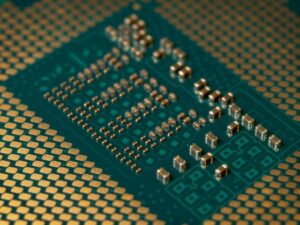
A chip — or processor — is the brain of a device. It takes instructions, processes them, and produces an output. Your laptop has one. Your phone has one. So does every server running every AI model on the planet.
Standard computer chips (called CPUs) were designed to handle many different kinds of tasks, one after another, very quickly. For decades, that was enough. AI changed the requirement entirely.
Training an AI model — or running one — requires doing the same type of mathematical operation (matrix multiplication, for those curious) millions or billions of times simultaneously, across enormous datasets. CPUs are terrible at this. They’re built for variety, not volume.
AI chips are built specifically to do that one kind of maths — over and over, in parallel, at enormous scale. Different types of AI chips optimise for different stages of that process, which is why several distinct chip categories now exist alongside the traditional CPU.
GPU — The Gaming Card That Took Over AI
The GPU — Graphics Processing Unit — was originally designed for one job: rendering video game graphics. Every pixel on a gaming screen requires the same type of floating-point maths, applied to thousands of pixels simultaneously. GPUs were built to do exactly that.
Around 2012, researchers at the University of Toronto discovered that the same parallel processing architecture that made GPUs good at rendering graphics also made them extraordinarily good at training neural networks. Nvidia noticed. The company pivoted aggressively toward AI computing, and the rest is industry history.
Nvidia’s H100 and H200 are currently the most in-demand AI chips on the planet. Every major AI model you’ve heard of — GPT-5.6, Gemini, Claude Fable 5, Grok — was trained on clusters of these chips. A single H100 costs between $25,000 and $40,000. A full training cluster for a frontier model requires tens of thousands of them.
The AI compute shortage we covered — where Google couldn’t even meet Meta’s demand for AI capacity — is fundamentally a GPU shortage. There aren’t enough H100s and H200s in the world to meet current demand, which is why companies like Google, Microsoft, and Meta are spending hundreds of billions building data centers and why OpenAI developed its own custom chip rather than rely on Nvidia alone.
Where you’ll find GPUs: AI data centers, gaming PCs, high-end laptops. Your laptop may have a GPU for gaming or video editing — but it’s a consumer-grade one, not the data center grade used for AI training.
NPU — The AI Chip Living Inside Your Phone Right Now
You almost certainly own a device with an NPU inside it — you just don’t know it’s there.
An NPU — Neural Processing Unit — is a chip designed specifically to run AI tasks on your device, locally, without sending anything to a server. It’s small, power-efficient, and optimised for the kind of AI tasks a phone or laptop does thousands of times a day: face recognition, photo enhancement, voice processing, autocorrect, real-time translation, and on-device AI assistants.
Apple’s Neural Engine is an NPU — it’s been inside every iPhone since the iPhone 8 (2017) and every Apple Silicon Mac since the M1 (2020). The iPhone 16 Pro’s A18 Pro chip contains a 16-core Neural Engine capable of 35 trillion operations per second. When Apple Intelligence processes a request locally on your device rather than sending it to a server — that’s the Neural Engine doing the work.
Qualcomm’s Hexagon NPU powers most Android flagship phones. Samsung, OnePlus, Xiaomi — if they run a Snapdragon processor, there’s a Hexagon NPU inside.
Intel and AMD both added NPUs to their laptop chips in 2024, which is what makes a computer a certified ‘AI PC.’ Microsoft’s Copilot+ PC certification requires a minimum of 40 TOPS (trillion operations per second) of NPU performance.
Where you’ll find NPUs: Your iPhone. Your Android phone. Your MacBook. Any laptop bought in 2024 or later with an Intel Core Ultra, AMD Ryzen AI, or Apple M-series chip inside.
TPU — Google’s Custom AI Engine
While Nvidia was building GPUs for the market and Apple was building NPUs for its own devices, Google went a different direction entirely: it built its own chip specifically for AI, available to nobody but Google.
A TPU — Tensor Processing Unit — is Google’s custom-designed chip for training and running AI models. Google developed it in secret starting in 2013, deployed it internally in 2015, and didn’t tell the world about it until 2016. By that point, Google had already trained several generations of AI models on hardware nobody else had.
TPU v5p — Google’s current generation — delivers roughly 459 teraflops per chip and is deployed in pods of up to 8,960 chips working in parallel. Google uses TPUs to train Gemini, to run Google Search’s AI features, and to power every inference request across Google’s products.
Google makes TPUs available to external developers through Google Cloud — but unlike GPUs, you can’t buy one. You can only rent access to TPU computing time.
Where you’ll find TPUs: Google’s data centers only. You interact with TPU-powered AI every time you use Google Search, Google Photos, Google Translate, or any Gemini-powered product.
GPU vs NPU vs TPU — Simple Comparison
| GPU | NPU | TPU | CPU | |
| Made by | Nvidia, AMD | Apple, Qualcomm, Intel | Intel, AMD, Apple | |
| Best for | AI training + gaming | On-device AI | AI training + inference | General tasks |
| Where you find it | Data centers, gaming PCs | Phones, laptops | Google data centers | Every computer |
| Power use | Very high | Very low | High | Medium |
| Speed (AI tasks) | Extremely fast | Fast for small tasks | Extremely fast | Slow |
| Powers ChatGPT? | Yes (Nvidia H100/H200) | No | Partly (Google AI) | No |
Which Chip Powers ChatGPT?
Nvidia GPUs — specifically the H100 and H200 — power the vast majority of ChatGPT’s training and inference. OpenAI runs its models on Microsoft Azure’s AI infrastructure, which is built around Nvidia’s data center GPU lineup.
However, OpenAI has been working to reduce that dependence. The company developed a custom inference chip codenamed “Jalapeño” in partnership with Broadcom, targeting the specific task of running (not training) AI models at scale. Inference — generating responses to user queries — is where the real volume is, and custom chips can do it more cheaply than renting Nvidia GPUs.
Anthropic (Claude), Meta (Llama), and Google (Gemini) are all following similar paths — building or commissioning custom chips to handle specific parts of the AI pipeline rather than relying entirely on Nvidia. We covered this dynamic in our piece on why the US government restricting AI models may be helping China — because China’s DeepSeek achieved near-frontier performance partly by redesigning its model to work efficiently on chips it could actually access.
Which Chip Is in Your iPhone and Windows AI PC?
iPhone 16 Pro and Pro Max: Apple A18 Pro — contains a 6-core CPU, 6-core GPU, and 16-core Neural Engine (NPU). The Neural Engine handles all Apple Intelligence features on-device.
MacBook Pro (M4 Pro/Max): Apple M4 — contains a CPU, GPU, and 38-core Neural Engine. Significantly more NPU performance than any current Windows laptop.
Windows AI PC (Copilot+): Intel Core Ultra 200V or AMD Ryzen AI 300 series — both include NPUs exceeding 40 TOPS, qualifying them for Microsoft’s Copilot+ certification. These handle on-device features like Windows Recall, live captions, and AI image generation in Paint.
Mid-range Android phones (2024–2026): Qualcomm Snapdragon 8 Elite — includes Hexagon NPU at 45 TOPS. Samsung Galaxy S25 series runs this chip.
None of the consumer chips above are suitable for training frontier AI models. They’re inference chips — built to run AI, not create it.
Why AI Companies Are Spending Billions on These Chips
Two forces are driving this spending: training costs and inference costs, and both keep growing.
Training GPT-4 reportedly cost over $100 million in compute alone. GPT-5.6 Sol — which we covered when the US government restricted its launch — is estimated to have cost several times that. Each new generation of frontier model is larger, more capable, and more expensive to train.
Inference costs are the other side of the equation. Every time any of the hundreds of millions of ChatGPT users sends a message, OpenAI pays for the compute to generate that response. At scale, inference costs are enormous — which is why companies are investing in custom chips that can run AI more cheaply than renting Nvidia GPUs.
The result is a chip arms race. Microsoft, Google, Meta, Amazon, and OpenAI are all spending tens of billions annually on AI infrastructure — largely chips and the data centers to house them. As we reported, big tech companies are on track to spend $650 billion on AI infrastructure in 2026 — up 80% from last year.
Should You Care About AI Chips When Buying a Laptop in 2026?
For most people buying a laptop this year, the NPU matters more than the GPU or CPU — and the reason comes down to where AI features actually run.
AI features are increasingly running on-device rather than in the cloud. Apple Intelligence, Windows Copilot+, and Android AI features all rely on local NPU performance to work without a data connection, without privacy exposure to cloud servers, and without waiting for a server response. The stronger the NPU, the better these features perform.
If you’re buying a Mac: Any M3 or newer chip has a strong Neural Engine. M4 is significantly faster. For most users, even an M3 MacBook Air handles all current Apple Intelligence features without issue.
If you’re buying a Windows laptop: Look for Copilot+ certification (40+ TOPS NPU) if you want AI features. Intel Core Ultra 200V and AMD Ryzen AI 300 series both qualify. Older chips without NPUs will run AI features more slowly or not at all.
If you’re buying for gaming or video editing: A discrete GPU matters more than the NPU. Nvidia’s RTX 40 and 50 series cards also include dedicated AI processing (called Tensor Cores) that accelerate specific tasks like DLSS upscaling and AI-powered noise removal in video.
One practical caution: chip component costs are up significantly in 2026 due to the memory shortage driving up device prices. If your current laptop handles your workload, waiting 12–18 months for prices to stabilise is a reasonable choice.
| 🟡 A NOTE FROM THE EDITOR
One thing worth keeping in mind: the chip category boundaries are blurring fast. Apple’s M4 has a GPU, NPU, and CPU on a single piece of silicon — they share memory and work together seamlessly. Nvidia’s newest Blackwell GPUs include dedicated AI inference engines that overlap with what NPUs do. Google’s next TPU generation may become available on-device. Within a few years, asking ‘GPU or NPU?’ may be a bit like asking whether your car runs on fuel or electricity — increasingly, the answer will be both. |
💬 WE WANT TO HEAR FROM YOU
| Which of these AI chips did you already know about before reading this article?
A) GPU — I knew about Nvidia from gaming or AI news B) NPU — I’d seen it mentioned in my phone or laptop specs C) None of them — this was completely new to me Tell us in the comments — and let us know if there’s a chip or hardware term you’d like us to cover next. |
❓ FREQUENTLY ASKED QUESTIONS
| Q: Do I need a GPU, NPU, or TPU for everyday AI tasks like ChatGPT?
For using AI tools like ChatGPT, Claude, or Gemini through a browser or app, you don’t need any specialised chip on your device. Those AI models run on remote data center GPUs, and your device is just displaying the results. Where your device’s NPU matters is for on-device AI features — Apple Intelligence, Windows Copilot+ tools, real-time translation, and photo processing that runs locally without sending data to a server. If you only use web-based AI, your existing device handles it fine regardless of its chip. |
| Q: Why does Nvidia dominate AI if Google and Apple have their own chips?
Google’s TPUs are only available inside Google’s own infrastructure — you can’t buy one. Apple’s Neural Engine is only in Apple devices. Qualcomm’s NPUs are only in phones and laptops. Nvidia’s data center GPUs are the only high-performance AI chips that any company in the world can buy, rent, or deploy at scale. That’s Nvidia’s structural advantage: it sells the picks and shovels to everyone in the AI gold rush, regardless of which AI lab, cloud provider, or startup is doing the digging. Until a rival builds a comparable chip that’s openly available at scale — which AMD, Intel, and several startups are attempting — Nvidia’s position remains dominant. |
| Q: What does TOPS mean and how much do I need?
TOPS stands for Trillion Operations Per Second — it’s the standard measure of how fast an AI chip can process data. For context: Microsoft’s Copilot+ PC certification requires a minimum of 40 TOPS from the device’s NPU. Apple’s M4 chip delivers around 38 TOPS on its Neural Engine (Apple measures this slightly differently). Qualcomm’s Snapdragon 8 Elite hits 45 TOPS. For on-device AI tasks like voice processing, photo editing, and AI writing assistance, 40 TOPS is currently a reasonable baseline. For training AI models, you’d need something in the millions of TOPS — which is why data centers use thousands of GPUs working together rather than a single chip. |
Sources: Nvidia technical documentation, Apple silicon specifications, Google TPU research blog, Qualcomm product pages, Microsoft Copilot+ PC certification requirements, AnandTech chip analysis, Tom’s Hardware GPU benchmarks, and the Stanford HAI 2026 AI Index Report.




10 thoughts on “GPUs, NPUs, and TPUs Explained: The AI Chips Powering Everything You Use”