
Anamika Dey, editor
By TechSun News Desk | techsunnews.com | October 13, 2026 | Tech / Privacy | 6 min read
Is WhatsApp private? It is the most popular messaging app on the planet, with billions of users, and the number one reason people use it over regular texting is the belief that their conversations are private.
But here is the thing. Private is not the same as invisible. And WhatsApp — which is owned by Meta, the same company that runs Facebook and Instagram — collects a lot more about you than most people realise.
So — is WhatsApp actually private? The honest answer is: yes and no. And the difference between those two matters quite a lot.
What WhatsApp Protects Well — End-to-End Encryption
Let us start with what WhatsApp gets right, because it genuinely does get this right.
Your message content — the actual words you type, the photos you send, the voice notes — is protected by end-to-end encryption. This means it is scrambled from the moment it leaves your phone to the moment it arrives on the other person’s phone. By design, WhatsApp itself cannot read your messages, and neither can Meta, because the encryption keys sit on your device. Meta says that if a government asked it to hand over the content of your conversations, it would have nothing readable to give.
That is genuinely strong protection and it is not something you should dismiss. It is the same technology used by Signal — the most privacy-focused messaging app available — and it works.
|
✅ What IS protected: Message text, photos, videos, voice notes, documents, calls and video calls. All end-to-end encrypted. Meta cannot read or listen to any of this. |
Where Privacy Stops, and Why That’s the Bigger Story

Here is where it gets complicated. Because while Meta cannot read your messages, it can see almost everything else.
This is called metadata — information about your communication rather than the content of it. And metadata is extraordinarily revealing. It tells Meta who you talk to, how often, at what times of day, from where, on what device, and for how long. That is a detailed portrait of your life — even without a single message being read.
Here is the full picture:
|
What WhatsApp Collects |
Can Meta See It? |
Risk Level |
|
Message content |
❌ No — end-to-end encrypted |
🟢 Low |
|
Who you message & when |
✅ Yes — metadata |
🔴 High |
|
Your phone number |
✅ Yes |
🟡 Medium |
|
Your contacts list |
✅ Yes — full list uploaded |
🔴 High |
|
Your location (if shared) |
✅ Yes |
🔴 High |
|
How often you use the app |
✅ Yes |
🟡 Medium |
|
Your device info |
✅ Yes — model, OS, battery |
🟡 Medium |
|
IP address |
✅ Yes — reveals location |
🔴 High |
|
Backup messages (Google/iCloud) |
⚠️ Not Meta, but Google or Apple can read it unless you turn on encrypted backup |
🔴 Very High |
We covered this in detail when US agencies examined claims that Meta staff could access WhatsApp messages. Meta denies those claims, and the investigation was closed in April 2026. Either way, the metadata collection described above is not in dispute.
Why Backups Deserve More Attention — This One Really Surprises People
There is one major privacy gap that almost nobody knows about.
When you back up WhatsApp to Google Drive or iCloud — which most people do automatically — those backups are NOT end-to-end encrypted by default. Your message history sitting in your Google or Apple cloud backup is readable by Google or Apple, and potentially by anyone who gains access to your cloud account.
WhatsApp added an optional end-to-end encrypted backup feature in 2021. But you have to turn it on manually — most people never do.
|
🔧 Fix this right now: Go to WhatsApp → Settings → Chats → Chat Backup → End-to-end Encrypted Backup → Turn on. Create a password you will remember. This encrypts your backup so only you can access it. |
What Does Meta Actually Do With Your Data?
A common question is what Meta actually does with this data.
WhatsApp’s privacy policy says it shares account, device and usage information with other Meta companies, which can use it to personalize ads on Facebook and Instagram. Message content is not part of that, but the patterns around your messages can still be revealing: who you talk to, how often, and when. The details can vary by region and by your settings.
The issue becomes more significant as AI systems become better at connecting and analyzing large datasets — AI is changing how companies profile and target people at a scale that was impossible five years ago. Metadata that seemed harmless individually becomes revealing when AI connects thousands of data points together.
And as we covered in our piece on whether your phone is spying on you — WhatsApp is just one part of a much larger data collection picture happening across your entire device. The apps interact. The data compounds. If you also want to stop AI chatbots from training on what you type, see our guide to turning off AI training.
WhatsApp vs Signal — The Real Comparison
If you are serious about privacy, this is the comparison that matters.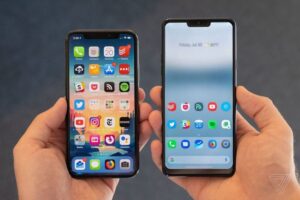
|
📱 WhatsApp: End-to-end encrypted messages ✅. Massive metadata collection ❌. Owned by Meta ❌. 3 billion users — everyone you know is on it ✅. Backups not encrypted by default ❌. |
|
📱 Signal: End-to-end encrypted messages ✅. Minimal metadata collection ✅. Independent non-profit ✅. Far fewer users — most people are not on it ❌. Encrypted backups by default ✅. |
Privacy groups such as the EFF recommend Signal as a strong choice for private messaging, mainly because it collects far less metadata than WhatsApp.
The realistic answer for most people: use WhatsApp for everyday conversations where message content privacy is what matters. Switch to Signal for genuinely sensitive conversations — financial, medical, legal, or anything you would not want stored in a metadata trail.
What You Can Actually Do to Improve Your WhatsApp Privacy
You cannot opt out of metadata collection entirely while using WhatsApp. But you can reduce your exposure meaningfully:
- 🔒 Enable end-to-end encrypted backups — Settings → Chats → Chat Backup → E2E Encrypted Backup → Turn on
- 📍 Turn off live location sharing — only share location when you specifically choose to, not continuously
- 🔕 Limit read receipts and last seen — Settings → Privacy → hide this from contacts you do not fully trust
- 🛡️ Use a VPN on public Wi-Fi — your IP address (which reveals your location) is visible to Meta. A VPN masks this. We tested the best options here: Best VPN for Privacy 2026
- 🔑 Use a strong unique password for your WhatsApp account — and a password manager to keep track. See our guide: Best Password Manager 2026
- 📵 Review which apps have access to your contacts — WhatsApp uploads your full contact list. Check your phone settings and revoke access to apps that do not need it
And if all of this is making you think more carefully about your overall digital footprint — our guide on how much data your phone collects and why a good antivirus matters on Android especially are worth reading too.
Understanding these tools starts with understanding the basics — what AI companies like Meta actually do with your data is covered in our piece on the dark side of ChatGPT, which applies equally to Meta’s broader AI ambitions.
FAQ — Is WhatsApp Private?
1. Can Meta read my WhatsApp messages?
No — message content is end-to-end encrypted and Meta cannot access it. But Meta can see extensive metadata: who you talk to, when, how often, your location, your device, and your contact list. Some of this information is shared within Meta’s family of apps, including Facebook and Instagram, and can be used to personalize ads there.
2. Is WhatsApp safer than regular SMS?
Yes — significantly safer for message content. Regular SMS is not encrypted at all — your carrier can read every message. WhatsApp’s end-to-end encryption means only you and the recipient can read the content. But WhatsApp still collects metadata about who you talk to and when, and shares some of it with Meta. It is a trade-off: much better content protection, but metadata that still leaves a trail.
3. Should I switch to Signal?
If privacy is your priority and the people you communicate with are willing to switch — yes, Signal is significantly more private than WhatsApp. It collects almost no metadata, is run by a non-profit with no advertising business model, and encrypts backups by default. The practical barrier is that most people are not on Signal. The realistic answer for most people: keep WhatsApp for everyday use, use Signal for conversations where privacy genuinely matters.
|
💬 Tell Us: Did you know how much metadata WhatsApp shares with Meta before reading this? And has it changed how you feel about using it? Drop your honest reaction in the comments — and if you have already switched to Signal or another app, tell us whether you found it practical. Real experiences from real people are more useful than any privacy guide. |
techsunnews.com | Tech / Privacy / Security | © 2026




One thought on “Is WhatsApp Really Private? Here’s What Meta Actually Knows About You”