Anamika Dey, editor · By TechSun News Desk | techsunnews.com | September 5, 2026 | Autos / Transportation / Trending | ~7 min read
What This Article Covers
|
The Tesla Cybercab NHTSA audit query began one day after the vehicle’s Austin launch. Say you open the Tesla app in Austin this week and it offers you a ride in something called a Cybercab. No steering wheel. No pedals. Not even a rearview mirror. In this hypothetical, you get in anyway — because it’s there, because it’s Tesla, because the marketing made it look inevitable. That’s roughly the position a small number of real Austin riders were in this week. It’s also the exact question federal regulators are now asking Tesla to answer.
What Tesla Actually Launched in Austin — and Why Regulators Moved Fast
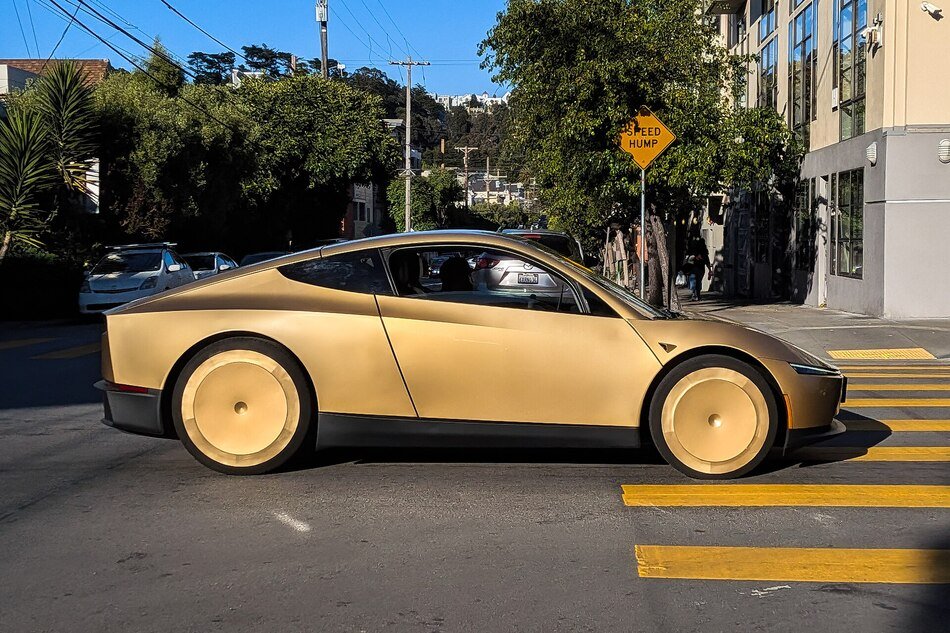
On September 3, Tesla began commercial rides in its two-seat Cybercab in Austin, Texas, booked through Tesla’s own robotaxi app. The vehicle has no steering wheel, no brake or accelerator pedal, and no conventional side mirrors, and is designed to run exclusively on Tesla’s Full Self-Driving software.
The next day, the National Highway Traffic Safety Administration (NHTSA) announced it had opened what’s called an Audit Query — a formal review of the technical basis Tesla used to certify the Cybercab as compliant with federal vehicle safety rules. That distinction matters for everything that follows: an Audit Query is an information-gathering enforcement tool, not a finding that the vehicle is unsafe, and it doesn’t order a recall or a stop-sale.
Why NHTSA Opened Its Tesla Cybercab Audit
In the U.S., automakers generally don’t need NHTSA’s pre-approval to sell or deploy a new vehicle. Instead, they self-certify that it meets every applicable Federal Motor Vehicle Safety Standard (FMVSS), and NHTSA can investigate afterward if something looks off. That’s what triggered the Tesla Cybercab NHTSA audit query: Tesla self-certified the Cybercab as fully FMVSS-compliant, even though the vehicle is missing hardware…” — a steering wheel, foot pedals, mirrors — that those standards were largely written around decades ago.
NHTSA’s own notice frames the question directly. The agency says it will examine the process and technical data behind Tesla’s certification, and specifically how much of that certification depended on Tesla deciding that certain federal standards simply don’t apply to a vehicle with no human driving position at all.
How Can a Car With No Steering Wheel Be Self-Certified?
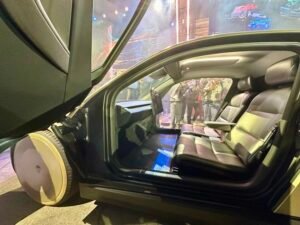 Self-certification isn’t a loophole unique to Tesla — it’s how nearly every vehicle reaches U.S. roads. Manufacturers test their own designs, keep engineering and compliance records, and certify compliance themselves; NHTSA’s oversight role kicks in afterward, through spot checks, crash data, and audits like this one. What makes the Cybercab case unusual is the argument underneath the certification: Tesla isn’t just claiming the car drives safely, it’s claiming the car is legally compliant despite removing equipment that federal rules have historically assumed every road vehicle would have.
The Zoox Precedent: This Has Happened Before
This isn’t the first time NHTSA has faced this exact question. In 2022, Amazon-owned Zoox self-certified its own control-free, cube-shaped robotaxi — no steering wheel, no pedals, the same basic setup Tesla is now defending. NHTSA opened an inquiry that escalated into an audit query, and the review took years to resolve. The agency didn’t close its Zoox case until 2025, and even then it granted the company a limited exemption for testing rather than simply accepting the original self-certification.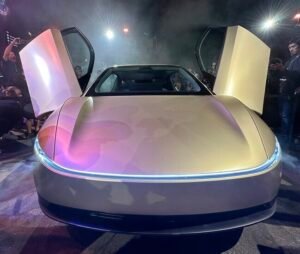
If that timeline is any guide, an audit query tends to be the start of a long regulatory conversation, not a same-week yes-or-no.
| Vehicle | Manual controls | Certification path | Current regulatory status |
| Cybercab (Tesla) | None — no steering wheel, pedals, or mirrors | Self-certified under FMVSS | Under NHTSA Audit Query, opened September 2026 |
| Robotaxi (Zoox / Amazon) | None — cube-shaped cabin design | Self-certified, later sought a formal exemption | Limited testing exemption granted in 2025, after a multi-year review |
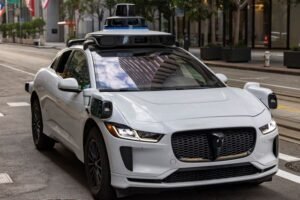
| Robotaxi (Waymo) | Retained — no human driver, but standard hardware | Certified as a conventional passenger vehicle | Commercial service in multiple U.S. cities; no comparable audit query |
What NHTSA Is Actually Examining
Beyond the certification logic itself, the audit’s stated scope covers an estimated population of up to about 1,000 Cybercabs — the number Tesla used to describe how many vehicles the certification in question applies to. That’s a very different figure from how many are actually on the road: Texas registration records reportedly showed only around 45 Cybercabs registered as of the day the audit was announced. Neither number says how many vehicles were actually carrying paying passengers — the audit’s scope, state registrations, and active service are three separate things, and it’s worth not collapsing them into one.
What This Means for Robotaxi Safety
Most of the public conversation about robotaxi safety so far — including our own look at Are Robotaxis Safe? What to Know as Driverless Cabs Hit the Streets in 2026 — has centered on how well the driving software performs: crash rates, edge cases, how a robotaxi handles a stalled car or an emergency vehicle. This audit is about something narrower, and arguably more foundational: whether a vehicle can legally exist on U.S. roads at all without giving any occupant a way to physically intervene, regardless of how well the software drives.
What Happens Next
NHTSA is separately working on updating FMVSS to formally accommodate vehicles built without human controls, but that rulemaking isn’t finished, and the agency has said existing standards remain in force until it is. In the meantime, Cybercabs are still operating in Austin — the audit’s opening notice doesn’t order a stop-sale or a recall. From here, the range of outcomes is wide: the audit could close with no action, NHTSA could ask Tesla for design or documentation changes, or the case could follow something closer to Zoox’s multi-year path toward a formal exemption. Tesla had not publicly detailed its underlying certification data at the time of writing.
Tesla shares fell more than 5% in the trading session after the audit was announced, reversing much of the gain from the Cybercab launch a day earlier — a reminder that, for investors at least, the regulatory question is already being priced in.
| The Bottom Line
Nothing about this audit stops Cybercabs from running in Austin today. But it puts an official, public spotlight on a bet Tesla made early: that the fastest route to full autonomy is to remove the steering wheel first and defend that decision to regulators second. The Tesla Cybercab NHTSA’s audit query is the start of that conversation, not the end of it. |
FAQs
Is it illegal to ride in a Cybercab right now?
No. The audit doesn’t order a stop-sale or a recall — Cybercabs are still operating and taking riders in Austin while NHTSA reviews Tesla’s certification.
What is an NHTSA Audit Query, exactly?
It’s a formal, information-gathering process NHTSA uses to review the technical data and reasoning behind a manufacturer’s self-certification. It’s investigative rather than punitive, and it can end with no action, a request for changes, or further enforcement, depending on what the agency finds.
Has this happened to another company before?
Yes. Amazon’s Zoox went through the same process starting in 2022 for a similarly control-free robotaxi — a review that took years and ended with a limited exemption rather than a straightforward approval of the original self-certification.
Tell Us What You Think
Would a car with zero manual controls make you more comfortable riding in a robotaxi, or less — and where’s your personal line? Let us know in the comments.
| Editor’s Observation
Self-certification runs on trust, then verification. Tesla isn’t accused of faking test data here — it’s being asked to show its work on a judgment call: that certain safety rules written decades ago simply don’t apply to a car with no one meant to drive it. That’s a reasonable thing to ask before a fleet of these scales up, not after. |
Sources
NHTSA — Investigation into Tesla Cybercab Self-Certification (official press release)
TechCrunch — Feds launch investigation into Tesla’s Cybercab deployment
Axios — Tesla’s Cybercab triggers regulatory game of chicken
Boston Globe / AP — Feds open probe into Musk’s steering-wheel-free taxis