
Nandini Roy Choudhury, writer
By TechSun News Desk | techsunnews.com | July 6, 2026 | Tech / Apple / Smartphones | 5 min read 📱
Apple has not officially announced a foldable iPhone. That distinction matters — and we’ll keep making it throughout this article.
What has changed is the weight of evidence pointing toward one. Multiple supply-chain sources, respected analysts, and component manufacturers have now independently converged on the same picture: Apple’s first foldable phone is likely to be revealed at its September 2026 event alongside the iPhone 18 Pro — but getting your hands on one before the end of the year is a different story entirely.
The freshest signal came July 5, when analyst Ming-Chi Kuo — one of the most reliable Apple supply-chain trackers in the industry — published a note saying Apple will likely “repeat the iPhone X story.” Announce in September. Pre-orders delayed to Q4. Delivery times stretching four to six weeks from the moment orders open.
If that plays out, this is shaping up to be one of the most anticipated — and most frustrating — Apple launches in years.
What Has Changed Since Earlier Rumours
Apple foldable rumours have circulated since 2017. What makes 2026 different is that the story has moved from concept to production.
According to multiple supply-chain reports cited by Nikkei Asia and MacRumors, Apple approved internal mass production of the foldable iPhone in June 2026. Samsung Display — Apple’s screen supplier — has already started building the custom fold OLED panels. Foxconn is expected to begin large-scale assembly by late July.
Apple has reportedly booked parts for roughly 10 million foldable iPhones in the second half of 2026 — up from an earlier forecast of 7–8 million — which suggests the company has more confidence in demand than it did six months ago.
Mass production starting in late July for a September announcement is consistent with Apple’s usual manufacturing timeline for a new iPhone.
Why Supply Is Expected to Be Extremely Limited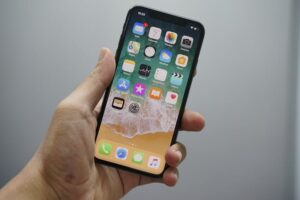
More parts booked doesn’t mean easy availability. Kuo estimates Apple’s suppliers will ship roughly 7–8 million foldable units in all of 2026 — compared to 20–22 million iPhone 18 Pro models combined. That ratio tells you a lot.
The manufacturing challenge is real. A foldable iPhone requires a new hinge design, a custom OLED panel engineered to fold without creasing, tighter internal tolerances than any previous iPhone, and — reportedly — a new material Apple developed specifically to make the fold crease nearly invisible. Sources told MacRumors Apple pursued this “regardless of cost.”
One report from April flagged a delay of up to two months in the test phase. A more recent DigiTimes report suggested Apple may recover some of that time during mass production — but the window is tight.
The result, according to Kuo, is a device that could “sell out immediately after pre-orders open” with delivery lead times quickly stretching to four to six weeks or longer. If you want one before 2027, ordering the moment pre-orders go live may not be optional.
This supply constraint isn’t unique to Apple right now. As we covered in our piece on the global memory chip shortage hitting Apple and Microsoft, component scarcity is affecting Apple’s entire 2026 lineup — and a first-generation foldable with custom parts is the most vulnerable product of all.
Expected Launch Timeline
Based on the current supply-chain consensus, here is how the launch is expected to unfold — though Apple has not confirmed any of this.
September 2026: Apple reveals the foldable iPhone at its fall event alongside the iPhone 18 Pro and iPhone 18 Pro Max. The device is shown, demonstrated, and priced.
October–November 2026: Pre-orders open, but not immediately after the September reveal. Kuo’s note explicitly draws the parallel to iPhone X in 2017, which was announced in September but didn’t open for pre-order until late October.
Late 2026 or early 2027: Most buyers receive their devices. Production analyst Ming-Chi Kuo warned in December 2025 that supply shortages could extend into 2027 for early buyers.
One wrinkle: some reports suggest Apple could announce the device in September but delay its sale date entirely until December or even Q1 2027, depending on whether manufacturing meets quality thresholds. Apple has done this before — the Vision Pro was announced at WWDC in June 2023 and didn’t ship until February 2024.
What the Device Is Expected to Look Like
According to supply-chain leaks and analyst reports — not Apple — here is what the foldable iPhone is expected to feature.
Design: A book-style fold, wider than it is tall — more like an open book or small tablet than the tall flip-style foldables from Samsung and Motorola. This gives it a 4:3 aspect ratio closer to an iPad than a standard iPhone.
Displays: An outer screen of approximately 5.49 inches for use when closed, and an inner display of around 7.76 inches when unfolded. Resolution leaks suggest 2,088 x 1,422 on the outer display and 2,713 x 1,920 inside.
Crease: Multiple sources describe the fold crease as “nearly invisible” — a major differentiator from every other foldable on the market, where the crease is a common complaint.
Frame: Titanium for stress-bearing parts, aluminium elsewhere for heat dissipation — similar to the current iPhone 15 and 16 Pro approach.
Name: Still unconfirmed. Earlier leaks used “iPhone Fold” but more recent reports favour “iPhone Ultra” — positioning it above the Pro Max as Apple’s most premium device. Apple has not confirmed either name.
Expected Price
Supply-chain reports and analyst estimates suggest a starting price of $2,299 to $2,499 in the US, according to Ming-Chi Kuo’s March 2026 note. A leaker on Weibo offered more specific per-storage-tier pricing: $2,325 for 256GB, $2,645 for 512GB, and up to $2,905 for 1TB.
For context, the iPhone 16 Pro Max starts at $1,199. This device is expected to cost roughly double.
That pricing is already being shaped by the same forces we reported on when Apple raised MacBook and iPad prices earlier this year — the global memory chip shortage has driven component costs sharply higher across Apple’s entire lineup, and a first-generation foldable with custom parts will carry a premium on top of that.
How It Compares to Samsung’s Foldables
Samsung has been making foldable phones since 2019. Apple is entering a market Samsung has owned for seven years — and Samsung isn’t standing still.
Samsung’s Galaxy Z Fold 8 is expected to launch later this month at around €1,999 (approximately $2,200) in Germany for the new wider “Wide” model, and around €2,399 for the Fold 8 Ultra — pricing that puts both in direct competition with Apple’s expected range.
The key differences, based on current reporting:
Crease: Apple’s reportedly crease-free display would be a significant hardware advantage if it delivers as described. The crease on Samsung’s foldables has been a persistent criticism for years.
Software: Apple’s iOS 27 reportedly includes native foldable layout APIs — meaning the device arrives with a software ecosystem designed around it from day one, rather than waiting for developers to retrofit apps.
Ecosystem: Apple’s tight integration across iPhone, Mac, iPad, and AirPods is a structural advantage. Samsung has similar cross-device features but Apple’s platform lock-in is generally deeper.
Availability: Samsung’s foldables will be on shelves in July 2026. Apple’s may not be widely available until early 2027. For buyers who want a foldable now, Samsung has a head start of at least six months.
Should You Wait for the Apple Foldable?
That depends on what you already own and how much you value being first.
If you’re on an iPhone 15 or 16 and happy with it, waiting makes sense. The foldable is positioned as a premium addition to the lineup, not a replacement for the standard Pro. Most Apple users won’t need one.
If you’re considering a Samsung Galaxy Z Fold 8 right now, the calculus is harder. Samsung’s device ships in weeks, not months. Apple’s device — if it arrives as expected — will likely have a better display and tighter software integration, but could cost the same or more and take months to actually deliver.
And if you’re the kind of buyer who always wants the latest Apple hardware on launch day — start saving now. At $2,300–$2,500, this will be the most expensive iPhone Apple has ever sold.
| 🟡 EDITOR’S OBSERVATION
The most revealing detail in this story isn’t the price or the crease-free display. It’s the 10 million unit forecast — up from 7–8 million just a few months ago. Apple doesn’t raise production targets without strong early demand signals from carriers and retailers. Someone is already confident this sells. Whether the device ships on time, in quality, and at the expected price is the only remaining question — and for a first-generation product this complex, that’s not a small caveat. |
💬 WE WANT TO HEAR FROM YOU
| Would you buy Apple’s first foldable iPhone if it launches at $2,300–$2,500?
A) Yes — I’ve been waiting for this and I’ll pay the price B) No — too expensive, I’ll stick with the iPhone 18 Pro C) I’ll wait for the second generation when they fix any issues Tell us in the comments — this is one of the most anticipated Apple launches ever. |
❓ FREQUENTLY ASKED QUESTIONS
| Q: Has Apple officially confirmed a foldable iPhone?
No. Apple has not made any official announcement about a foldable iPhone. Everything in this article is based on supply-chain reports, analyst notes — primarily from Ming-Chi Kuo — and component manufacturer disclosures. These sources have a strong track record for Apple predictions, but until Apple announces the device at an official event, treat all details as reported expectations rather than confirmed facts. |
| Q: When can I actually buy the foldable iPhone?
According to analyst Ming-Chi Kuo’s July 5 note, Apple will likely announce the foldable at its September 2026 event but delay pre-orders to Q4 2026 — similar to how the iPhone X was announced in September 2017 but didn’t open for pre-order until late October. If manufacturing stays on track, some buyers may receive devices before the end of 2026. Others, particularly if Kuo’s warning about supply shortages extending into 2027 proves accurate, may wait until early next year. |
| Q: Is the iPhone Fold the same as the iPhone Ultra?
Nobody outside Apple knows for certain. Earlier leaks used ‘iPhone Fold’ as the working name, following Samsung’s Galaxy Fold branding. More recent supply-chain reports and dummy model leaks have shifted toward ‘iPhone Ultra’ — which would position the device above the Pro Max in Apple’s product hierarchy, consistent with the Ultra naming Apple already uses for Apple Watch and M-series chips. Apple has not confirmed either name and won’t until the official announcement. |
Disclaimer: This article is based on supply-chain reporting from Nikkei Asia, MacRumors, DigiTimes, and AppleInsider, analyst notes from Ming-Chi Kuo (published July 5, 2026), and leaker disclosures cited by MacRumors and Apple Insider. Apple has not officially announced any foldable iPhone. All specifications, pricing, and timelines are reported expectations and subject to change. Information reflects what was available as of July 6, 2026.