Rohit Baniwal, writer
By TechSun News Desk | techsunnews.com | June 16, 2026 | Tech / Privacy | 6 min read
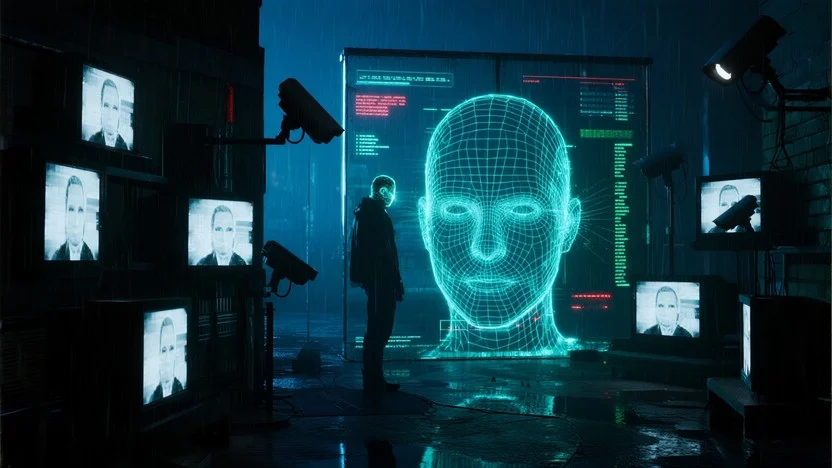
You bought your ticket. You made the trip. You are queuing outside the stadium, excited for the match. And somewhere above you, a camera is scanning your face, matching it to a database, and deciding whether to let you in.
Welcome to the 2026 FIFA World Cup — the most surveilled sporting event in history.
Across 16 venues in the US, Canada and Mexico, the tournament has deployed a surveillance infrastructure that goes well beyond anything seen at a major sporting event before. Facial recognition. Robot dogs. AI cameras that track crowd movement in real time. Counter-drone systems that privacy experts warn may be intercepting phone data from fans in the stands.
Nobody is talking about this loudly enough. So let us go through exactly what is happening — and what it means for the millions of people attending matches over the next month.

What Is Actually Being Deployed — Venue by Venue
Several of these systems are already being deployed at World Cup venues:
| Stadium | City | Surveillance Tech | Concern Level |
| Gillette Stadium | Boston, MA | AI facial recognition for entry + payments | 🔴 High |
| Hard Rock Stadium | Miami, FL | Facial scan entry + Go-Ahead Entry app | 🔴 High |
| Mercedes-Benz Stadium | Atlanta, GA | AI face recognition + biometric payments | 🔴 High |
| AT&T Stadium | Dallas, TX | Robot dogs + AI cameras + drone defense | 🔴 High |
| MetLife Stadium | New Jersey | Robot dog patrols + facial recognition | 🔴 High |
| SoFi Stadium | Los Angeles, CA | AI crowd monitoring + facial entry | 🟡 Medium |
| Estadio Azteca | Mexico City | 100% digitized biometric entry | 🔴 High |
| 💰 The bill: Federal agencies have invested $365 million in surveillance technology specifically for the World Cup. That is your tax money funding a facial recognition infrastructure that will outlast the tournament. |
The Facial Recognition System — How It Actually Works
At stadiums using the Go-Ahead Entry system — which includes Gillette, Hard Rock and Mercedes-Benz — the process works like this:
- You download an app before attending
- You take a selfie which creates a biometric template of your face
- At the gate, cameras scan your face and match it to your template in seconds
- The gate opens — no ticket, no card, just your face
This sounds convenient. And it genuinely is. But it also means your facial biometric data now exists in a database operated by a private company, shared with federal agencies, and — based on current privacy policies — potentially retained long after the final whistle.
This connects directly to what we covered in our piece on whether your phone is already spying on you — the data collection happening at World Cup venues is the same logic taken to its physical extreme. Your face becomes your ID. Your movements become data. And once that data exists, you cannot take it back.
The Robot Dogs — What They Can and Cannot Do
This is the story that went viral last week, and it is worth separating fact from headline.
Four-legged robot units are patrolling venues in Dallas and New Jersey. In Monterrey, Mexico, the city council purchased additional units for stadium security. They look like Boston Dynamics Spot robots — and they are.
Boston Dynamics has publicly stated their robots at World Cup venues do not have facial recognition capabilities — they are being used for perimeter inspections, suspicious package detection, and support in hazardous situations. The University of Liverpool’s analysis of the deployment confirmed this is the stated purpose.
But here is the nuance privacy experts are flagging: the robots do have cameras, and the question of what those cameras capture, how long footage is retained, and who has access to it has not been fully answered publicly by FIFA or the host venues.
| ⚠️ The real concern: As the EFF’s Matthew Guariglia put it — surveillance is ‘infrastructure that will outlast the current World Cup.’ The cameras, systems and databases being built for this tournament will still be in those stadiums in 2027, 2028 and beyond. |
The Counter-Drone Systems — And Your Phone
One aspect receiving increased scrutiny involves counter-drone systems.
Fortem Technologies has a multimillion-dollar contract with the Department of Homeland Security to deploy kinetic counter-drone systems at World Cup venues — systems that physically intercept unauthorized aircraft. That part makes sense.
The concern raised by privacy advocates — including Jake Laperruque, who has studied these systems — is that many counter-drone tools work by intercepting radio communications. In a stadium full of 70,000 fans, all using their phones, the question of whether fan device data is being swept up in that process remains, in his words, ‘unclear.’
The implications extend beyond stadium security alone. We covered in detail how much data your phone gives away just by being in your pocket — and a counter-drone system at a packed stadium represents a new category of potential exposure that most fans attending matches have no idea about.
The Bigger Picture — This Is a Test Run
A broader issue is what happens after the tournament ends: the World Cup is not just a football tournament. It is a technology testing ground.
The US is hosting the 2028 Summer Olympics in Los Angeles and the 2034 Winter Olympics in Salt Lake City. The surveillance infrastructure being built and tested at the World Cup right now will directly inform what gets deployed at those events — and at venues permanently after them. As the EFF has documented, surveillance systems introduced for major events rarely get dismantled after the event ends.
This connects to the broader pattern of AI being used in ways most people do not notice until it is too late to push back. The facial recognition systems at these stadiums are powered by the same AI models driving everything from search to job screening to credit decisions.
And with governments now wanting equity stakes in AI companies — the line between commercial surveillance technology and state surveillance infrastructure is getting harder to see clearly.
What Can Fans Actually Do?
Options may be limited for fans attending certain venues, but there are still steps worth considering:
- 📖 Read the privacy policy of the Go-Ahead Entry app before registering — understand what data is collected, how long it is kept, and who it is shared with
- 📵 Turn off Bluetooth and WiFi when not actively using them at the stadium — reduces potential exposure from radio communication interception
- 🛡️ Use a VPN on your phone — particularly on stadium WiFi networks. We tested the best options: Best VPN for Privacy 2026
- 🤳 Opt out where possible — some venues still offer traditional ticket entry. Check before you go whether facial recognition is mandatory or optional at your specific match
- 🔒 Review your phone privacy settings before attending — our guide on what your phone collects about you covers exactly what to check and turn off
And if you want to understand how all of this connects to AI more broadly — our plain-English guide to what AI is actually doing in 2026 is a useful starting point. The facial recognition systems at these stadiums are not magic — they are trained AI models, with all the accuracy issues and bias concerns that come with them.
The same privacy protections that matter for your WhatsApp messages — which we covered in our guide to whether WhatsApp is actually private — matter even more when the data being collected is your face.
FAQ — World Cup 2026 Surveillance
1. Is facial recognition mandatory to get into World Cup matches?
It depends on the venue and the ticket type. At stadiums using Go-Ahead Entry, registered fans can use facial recognition instead of a traditional ticket — but it is presented as an option rather than a requirement for most venues. However, the broader AI camera systems monitoring crowd movement are not optional — they operate regardless of whether you personally register your face. If you are in the stadium, you are being monitored.
2. Who has access to the facial recognition data collected at World Cup venues?
This is the question that privacy advocates say has not been fully answered. The Go-Ahead Entry system is operated by a private company. Federal agencies including DHS have contracted for security systems at venues. FIFA’s Human Rights Framework acknowledges privacy risks but does not specify exactly how long biometric data is retained or precisely who it is shared with. Until these policies are published in full. At present, the available information does not provide a complete answer.
3. Could this surveillance be used against fans after the tournament?
This is the concern that experts like the EFF take most seriously. Surveillance infrastructure — cameras, databases, AI systems — tends to persist after the events that justified it. The legal framework for what happens to the biometric data collected at World Cup venues after July 19 is not clear. In the US, there is no federal biometric privacy law, meaning the protections vary by state. Illinois has the strongest laws (BIPA). Texas and Washington have partial protections. Most other states have none. For the most up-to-date guidance, the EFF’s surveillance self-defence guide is worth bookmarking.
| 💬 We Want to Know: Are you attending any World Cup 2026 matches — and does the facial recognition and surveillance change how you feel about going? Or do you think this level of security is reasonable for an event this size? There genuinely is not a simple right answer here. Drop your take in the comments — we read every one. |
techsunnews.com | Tech / Privacy / News | © 2026