
Rohit Baniwal, writer
By TechSun News Desk | techsunnews.com | June 17, 2026 | Tech / AI / Transport | 6 min read
Picture this. You open an app, tap a button, and a car pulls up. No driver. No small talk. No tip anxiety. The car just drives you where you need to go safely, quietly, and without a human being in the front seat.
This is not a scene from a film anymore. In San Francisco, Los Angeles and Phoenix, this is already happening every day. And today, Mobileye one of the biggest names in self-driving technology confirmed they are targeting a US robotaxi launch in 2027.
So what actually is a robotaxi? How does it work? Is it safe? And when will one show up in your city? Here is the plain-English breakdown.
What Is a Robotaxi — Simple Version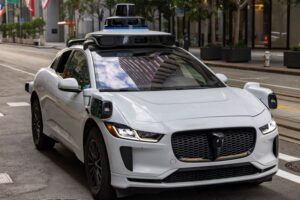
A robotaxi is exactly what it sounds like: a taxi with no human driver. The car uses a combination of cameras, radar, lidar (a laser-based sensor), GPS and AI software to navigate roads, follow traffic rules, avoid obstacles and get you from A to B without anyone at the wheel.
The AI doing the driving has been trained on millions of miles of real road data — learning to handle traffic lights, pedestrians, cyclists, bad weather and unpredictable human drivers. The more it drives, the better it gets.
| 📌 Key difference from a regular self-driving car: A robotaxi has no steering wheel, no pedals, and no human backup driver. It is fully autonomous the car is entirely in control from the moment you get in to the moment you get out. |
Who Is Already Running Robotaxis — Right Now
Robotaxis are already operating commercially in several cities:
| Company | Where Operating | Launch Target | Status |
| 🚗 Waymo (Google) | San Francisco, LA, Phoenix | Already live | ✅ Paying passengers now |
| 🚕 Tesla Robotaxi | Austin, TX | 2026 expanded | 🟡 Limited rollout |
| 🚙 Mobileye | US cities | 2027 | 🟡 Announced today |
| 🚌 Zoox (Amazon) | San Francisco, Las Vegas | 2026–2027 | 🟡 Testing phase |
| 🛻 Cruise (GM) | San Francisco | Paused | 🔴 After 2023 incident |
| 🚗 Baidu Apollo | China — 100+ cities | Already live | ✅ World’s largest fleet |
Waymo owned by Alphabet, the same company that owns Google is the clear leader right now. They have completed over 50 million paid passenger trips and are operating 24 hours a day in three US cities. You can book one right now on the Waymo One app if you are in San Francisco, LA or Phoenix.
How Does the Technology Actually Work?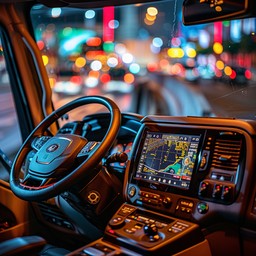
At a basic level, here’s how the system works here is what is happening inside a robotaxi:
- 📷 Cameras — dozens of them capture everything around the car in real time, 360 degrees
- 📡 Lidar sensors fire laser pulses to create a 3D map of everything nearby other cars, pedestrians, cyclists, road markings
- 🧠 AI software processes all of this data thousands of times per second and decides what to do accelerate, brake, turn, wait
- 🛰️ High-precision GPS knows exactly where the car is, down to centimetres
- ☁️ Remote monitoring — even without a driver, a human operator can watch the car’s camera feeds remotely and intervene if needed
This is the same category of technology as the AI agents now running inside your PC and phone software that can take actions autonomously in the real world, not just answer questions. The difference is that a robotaxi’s AI is making decisions at 60 mph with physical consequences.
Is It Actually Safe? The Honest Answer
Safety remains the biggest concern for most people and the honest answer is: safer than you might think, but not without incidents.
Waymo’s internal data and analysis from the National Highway Traffic Safety Administration shows their vehicles have significantly fewer serious accidents per mile than the US average for human drivers. The main cause of accidents in Waymo vehicles has been other human drivers hitting them, not the other way around.
But it is not perfect. General Motors’ Cruise division had to pause all operations in late 2023 after one of their vehicles was involved in a serious incident with a pedestrian and then handled the aftermath badly. That incident set the entire industry back regulators became more cautious and public trust took a hit.
Based on current evidence: robotaxis are probably safer than average human drivers on routine journeys in mapped urban areas. They are not safer in every situation, and they handle unexpected edge cases worse than experienced human drivers. Both of those things can be true at the same time.
| 📊 The stat that matters: Human drivers cause approximately 1.35 million road deaths globally per year. 94% of serious accidents are caused by human error. Even an imperfect robotaxi, if it eliminates most human error, could save hundreds of thousands of lives annually at scale. |
The Jobs Question: What Happens to Uber and Lyft Drivers?
The discussion is not only about technology it also affects employment. The US has approximately 1.5 million rideshare and taxi drivers. If robotaxis become mainstream by 2030, that is one of the largest employment disruptions since the invention of the car itself.
We covered the broader picture of which jobs AI is actually replacing and which ones are safe and driving is near the top of the at-risk list. Not immediately. Not everywhere. But the direction is clear.
The counterargument from the robotaxi companies: they create new jobs remote operators, vehicle maintenance technicians, AI trainers, safety analysts. That is true. But those jobs require different skills than driving, and the transition will not be smooth for everyone.
This connects to the broader question of how much energy and infrastructure AI development is consuming robotaxi fleets require significant charging infrastructure, compute power for real-time AI processing, and ongoing lidar/sensor maintenance. The environmental footprint of a fully autonomous transport network is not trivial.
When Will One Come to Your City?
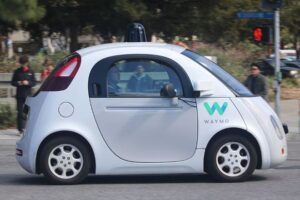
Current industry projections look roughly like this:
- ✅ San Francisco, LA, Phoenix — Waymo operating RIGHT NOW. Book on Waymo One app
- 🟡 Austin, TX — Tesla limited robotaxi service expanded in 2026
- 🟡 More US cities — Mobileye targeting 2027 launch, Zoox expanding 2026–2027
- 🔵 Most US cities — 2028–2030 realistic window for wider availability
- 🌍 Global rollout — 2030+ for most international cities outside China
The speed of rollout depends heavily on regulation. Each US city and state sets its own rules for autonomous vehicles which is why Waymo can operate freely in California but not yet in Texas or New York.
And the privacy angle matters too. When you get in a robotaxi, you are inside a vehicle full of cameras. Your journey is recorded, your face may be captured, and your route is stored. These are the same concerns we raised about facial recognition at World Cup stadiums and what your phone is already collecting about you just in a new physical context.
If you would like more background on the technology and how it’s reshaping daily life like search online to how you might get to work our plain-English guide to what AI actually is in 2026 is a useful foundation.
FAQ — Robotaxis in 2027
1. Can I use a robotaxi right now?
If you are in San Francisco, Los Angeles or Phoenix yes, right now, today. Download the Waymo One app, create an account, and you can book a ride with no human driver. Outside those cities, you will need to wait the most optimistic timelines put wider US availability at 2027–2028, but that depends on regulatory approval city by city.
2. What happens if the robotaxi gets into an accident?
The robotaxi company Waymo, Tesla, whoever is liable, not you. This is one of the biggest legal and insurance shifts that comes with autonomous vehicles. Companies like Waymo carry their own insurance and have incident response teams. If something goes wrong, you do not need to exchange insurance details with the car. The NHTSA has published guidance on autonomous vehicle incidents that covers your rights as a passenger.
3. Will robotaxis be cheaper than Uber?
Eventually almost certainly yes. Removing the driver removes the biggest cost in ride-hailing. Waymo’s current pricing is roughly comparable to Uber, but that is while the technology is still maturing and fleet sizes are small. As fleets scale and technology costs fall, most analysts expect robotaxis to be 40–60% cheaper than human-driven rides within a decade. That is the moment this goes from a tech novelty to something that genuinely reshapes how cities work.
| 💬 We Want to Know: Would you get in a robotaxi or does the idea of no driver make you uncomfortable? Drop your honest answer in the comments. Are you an early adopter who cannot wait to try it, or are you the person who will be the last to get in? And if you have already ridden in a Waymo or Tesla robotaxi tell us what it was actually like. |
techsunnews.com | Tech / AI / Transport | © 2026






One thought on “What Is a Robotaxi — And Will One Actually Pick You Up in 2027?”