

Anamika Dey, editor
By TechSun News Desk | techsunnews.com | July 25, 2026 | Tech / AI / Trending | 8 min read
Apple has opened its long-awaited, rebuilt Siri to the public. With the iOS 27 public beta now rolling out, millions of iPhone owners can finally try the assistant Apple first showed off at WWDC — the one that can see your screen, remember your context, and actually do things across your apps. But not every iPhone qualifies, access is gated behind a waitlist, and in some regions it isn’t coming at all this year.
Here’s what the new Siri actually does, whether your iPhone will get it, and how to get in line today.
The short version
Apple released the iOS 27 public beta on July 13, 2026, with a second public beta following on July 22. The headline feature is a completely overhauled Siri that Apple is now calling Siri AI. The final version of iOS 27 is expected to ship this fall, but the public beta means you don’t have to be a registered developer to try it right now.
The new Siri is a major departure from the assistant iPhone owners have lived with for over a decade. Instead of a voice command tool that mostly set timers and got web searches wrong, Siri AI is built to understand what’s on your screen, tap into your personal information, and carry out multi-step tasks across different apps — closer to a chatbot assistant that’s wired directly into your phone. It builds on the wave of hidden AI features already quietly running on your phone, but pulls them together into a single, conversational assistant.
What the new Siri can actually do
Three capabilities set Siri AI apart from the old Siri, according to Apple’s own briefing and hands-on reports from outlets that have tested the beta:
On-screen awareness. Siri can now see and understand what’s currently on your display. If you’re reading an email that mentions a time and place, Siri can offer a one-tap Calendar invite. If a message is confusing, you can ask Siri to explain it. Reading an article in Safari? Siri can summarize or flag what matters without you leaving the page.
Personal context. This is the piece Apple is leaning on to separate Siri from ChatGPT and Gemini as standalone chatbots. Siri AI can draw on the information already on your device — messages, emails, files, photos, contacts, and calendar — to answer questions like “What’s the address Priya sent me last week?” or find a specific photo buried in your library. That deep access to your personal data raises fair questions, and if you’ve ever wondered whether your phone is already spying on you, it’s worth understanding exactly what Siri can and can’t see.
Cross-app actions. Siri can now complete tasks that span multiple apps without you tapping between them: draft an email, edit and share a set of photos, add an address from Messages straight into a contact, or turn details in Mail into a reminder or calendar event.
There’s also a redesigned, standalone Siri experience with a chatbot-style interface, a system-wide “Search or Ask” gesture, and Dynamic Island integration.
Who’s actually powering Siri: the Google angle
One of the more surprising details behind the new Siri is who built the engine. According to multiple reports, the cloud-based side of Siri AI runs on a custom version of Google’s Gemini model, with Apple’s own on-device models handling other tasks. It’s a notable move for a company that has been fiercely protective of its AI work — Apple is even locked in a lawsuit accusing OpenAI of stealing AI hardware secrets — yet is now leaning on a rival’s model to power its flagship assistant. Reports peg the arrangement at roughly $1 billion per year for a customized, roughly 1.2-trillion-parameter Gemini model — though these figures come from industry reporting rather than an official Apple announcement, so treat the exact numbers as reported rather than confirmed.
Apple’s framing is that the Gemini model runs through its Private Cloud Compute system, meaning — per Apple — your data isn’t stored or used beyond fulfilling your immediate request. This split between an on-device model and a cloud model is exactly the shift from cloud AI to edge AI we’ve explained before — Siri now uses both. iOS 27 also lets you choose a different assistant, such as ChatGPT or Claude, as the default for certain Apple Intelligence features like Writing Tools.
Will your iPhone get Siri AI?
This is where a lot of people will be disappointed. iOS 27 will install on a wide range of iPhones, but Siri AI itself requires a device that supports Apple Intelligence. That means:
- iPhone 15 Pro and iPhone 15 Pro Max — supported
- iPhone 16 and newer (all models) — supported
- iPhone 15 and iPhone 15 Plus (the standard models) — will run iOS 27, but not Siri AI
- iPhone 14 and older — not eligible for Siri AI
So if you have a standard iPhone 15, updating to iOS 27 won’t unlock the new Siri. You’ll need at least an iPhone 15 Pro or any iPhone 16-series device.
How to join the Siri AI waitlist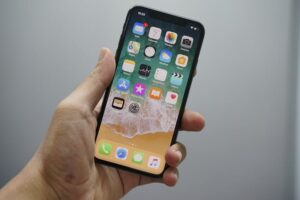
Even on a supported iPhone, Siri AI isn’t switched on automatically — Apple is rolling out access in batches through a waitlist. To join:
- Install the iOS 27 public beta on a supported iPhone (via Settings → General → Software Update → Beta Updates).
- Open Settings and go to Apple Intelligence (or tap “Try the new Siri” under the Siri settings).
- Tap Join Waitlist.
Access is granted in waves and can take anywhere from a few hours to a few weeks. Siri AI currently supports English only at launch.
A note of caution: this is still beta software. If you rely on your iPhone every day, consider installing the beta on a secondary device rather than your main phone.
The EU and China are being left out — for now
If you’re in the European Union, there’s an official catch. Apple has confirmed in its own newsroom that Siri AI is delayed in the EU for iOS 27 and iPadOS 27, because Apple and EU regulators couldn’t reach an agreement under the Digital Markets Act. When iOS 27 ships this fall, EU iPhone and iPad users won’t have Siri AI — though Apple says EU users will be able to access it on macOS 27 and visionOS 27.
In China, Siri AI remains unavailable pending separate regulatory approval, consistent with the broader delay in Apple Intelligence rolling out there. It’s a similar regulatory tangle to why Apple put Alibaba’s Qwen AI on iPhones in China instead of its own — local rules keep reshaping which AI features Chinese users actually get.
Should you rush to install it?
If you own a supported iPhone and you’re comfortable running beta software, the public beta is the fastest way to experience what is genuinely the biggest change to Siri since it launched. Just join the waitlist early, since access comes in batches.
If you’d rather not deal with beta bugs, the wait isn’t long — the finished iOS 27 is expected this fall, and Siri AI will continue expanding to more languages and regions after that.
Either way, the new Siri marks a real shift: for the first time, Apple’s assistant is built to understand your screen, your data, and your apps — and to actually act on them.
Have you tried the new Siri in the iOS 27 beta? Tell us what’s working and what isn’t in the comments.
Related on TechSunNews:
- Apple Accuses OpenAI of Stealing AI Hardware Secrets in New Lawsuit
- Apple Put Alibaba’s AI on iPhones in China — Here’s Why Your iPhone Isn’t Getting It
- 10 Hidden AI Features on Your Phone You Should Know About in 2026
- What Is Edge AI? Why AI Is Moving From the Cloud to Your Phone
Sources / further reading
- Apple Newsroom — “Apple introduces Siri AI, a profoundly more capable and personal assistant”
- Apple Newsroom — “Due to DMA, Siri AI delayed in EU for iOS 27 and iPadOS 27”
- TechCrunch — “Apple opens its new Siri AI to everyone with the iOS 27 public beta”
- 9to5Mac — “iOS 27 public beta 2 is here with Siri AI”
- MacRumors — “How to Get iOS 27’s New Siri AI: Join the Waitlist First”
- MacRumors — “Google Confirms Gemini-Powered Siri Coming Later This Year”
- TechRadar — “iOS 27 and Siri AI compatibility explained”






One thought on “Apple’s New Siri AI Is Here: Will Your iPhone Get It, and How to Join the Waitlist”