
Anamika Dey, editor
What This Article Covers
|
Qualcomm’s Snapdragon Summit wrapped up this week in Maui, and if you follow phone news even loosely, your feed was probably full of two words on repeat: Snapdragon 8 Elite. Except this time, Qualcomm didn’t just release a new version of its flagship chip. It released two.
On September 22, the company unveiled the Snapdragon 8 Elite Gen 6 and a new, higher-tier Snapdragon 8 Elite Extreme Gen 6 — splitting its top-tier Elite chip into two separate platforms for the first time. (Qualcomm tried a different kind of two-chip split last year, pairing the Snapdragon 8 Elite Gen 5 with a separate, lower non-Elite chip; this year, for the first time, both new chips carry the Elite name.) Both are built on a 2nm manufacturing process, a first for the company, and both are aimed squarely at what Qualcomm keeps calling the “agentic AI” era of smartphones.
Here’s what actually changed, and why it matters for the phone you’ll probably be shopping for in the next few months.
What’s Actually New Inside These Chips
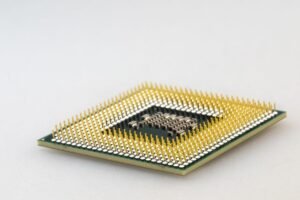 Both chips share the same core foundation: an eight-core Oryon CPU with two “Prime” cores clocked up to 5GHz and six “Performance” cores up to 4GHz, backed by 16MB of cache. According to Qualcomm and reporting from 9to5Google, that makes it the first mobile CPU to reach 5GHz — though as with most chipmaker claims, real-world speed depends on how well a phone’s software actually uses that headroom, not just the number on the spec sheet.
The standard Snapdragon 8 Elite Gen 6 gets a 10% CPU performance gain and 37% better CPU power efficiency over last year’s Gen 5, plus a 35% jump in GPU performance and a 14% faster NPU. The Extreme Gen 6 sits a step above it: a 13% CPU gain, the same 37% CPU efficiency improvement, a bigger 44% GPU performance jump with 40% better GPU power efficiency, and a 35% faster NPU with 33% better AI performance-per-watt, according to Qualcomm’s own briefing.
The bigger structural change is memory. The Extreme Gen 6 gets 50% more shared memory than its predecessor — enough, Qualcomm says, to run AI models with more than 30 billion parameters directly on the device using a Mixture-of-Experts architecture, instead of leaning on the cloud for anything demanding. If chip terms like NPU already make your eyes glaze over, our explainer on what an NPU does is a good place to start before going further into this one.
Why Split One Flagship Into Two?
Qualcomm hasn’t done this before. Previously, a single Snapdragon 8 Elite chip powered essentially every premium Android flagship for the year. Now there are two tiers, and Qualcomm’s own framing makes the reasoning explicit: “Today marks a milestone as we introduce not one, but two new flagship mobile platforms, delivering agentic AI experiences that are immediate, personal, and adaptive,” said Chris Patrick, Qualcomm’s senior vice president and general manager of mobile handsets, in the company’s announcement.
In practice, that gives phone makers more room to differentiate. A brand can put the standard Gen 6 in its regular flagship and save the pricier, more capable Extreme Gen 6 for an ultra or pro-tier model — similar to how companies already split their own lineups by screen size or camera hardware, just now extended to the chip itself.
The “Agentic AI” Pitch, Explained
Qualcomm has leaned hard on the phrase “agentic AI” for this launch, and it’s worth being precise about what that actually means rather than treating it as another marketing buzzword. The idea is AI that doesn’t just answer a question, but can carry out multi-step tasks across apps on your behalf, without you tapping through each step yourself.
Whether that becomes a feature you use daily or mostly a talking point for phone makers to build on top of, the extra memory bandwidth on the Extreme chip is what actually makes larger, more capable AI models possible on a phone rather than routed through a server. That’s part of a broader shift we’ve covered before, from AI processing happening mostly in the cloud to AI running directly on the edge AI and on-device AI hardware in your hand. It’s the same shift Apple has been making its own case for lately with its new AI-capable Mac lineup — just applied to phones instead of desktops.
Camera, Video, and Connectivity Also Got an Upgrade
 The Extreme Gen 6’s Spectra image signal processor supports up to 108-megapixel single-camera capture or 64MP across triple cameras with what Qualcomm calls zero shutter lag, plus photo capture up to 320MP, 8K video at 60 frames per second, and 4K super slow-motion at 240fps. It also adds hardware-accelerated H.266 (VVC) decoding, a newer and more efficient video codec, alongside the usual H.265, VP9, and AV1 support.
Both chips pair with a newly architected X105 5G modem, which Qualcomm says brings roughly 10% faster download speeds and support for the newest 5G Advanced standard, using six antennas to capture multiple data streams at once.
Snapdragon 8 Elite Gen 5 vs. Gen 6 vs. Extreme Gen 6
| Spec | 8 Elite Gen 5 | 8 Elite Gen 6 | 8 Elite Extreme Gen 6 |
| Process node | 3nm | 2nm | 2nm |
| CPU | Oryon, up to ~4.3GHz | Oryon, 2 cores up to 5GHz | Oryon, 2 cores up to 5GHz |
| CPU gain vs. Gen 5 | — | +10% perf, +37% efficiency | +13% perf, +37% efficiency |
| GPU gain vs. Gen 5 | — | +35% performance | +44% perf, +40% efficiency |
| NPU gain vs. Gen 5 | — | +14% faster | +35% perf, +33% AI perf-per-watt |
| On-device AI memory | Standard | Standard | 50% more; supports 30B+ parameter models |
| Video | Up to 8K30 | Up to 8K30 | 8K60, 4K240 slow-mo, H.266 |
| 5G modem | X85 | X105 | X105 |
Which Phones Are Getting These Chips First
Motorola has already confirmed its Signature 27 will be among the first phones to ship with the Snapdragon 8 Elite Extreme Gen 6. Beyond that, Qualcomm has said devices from Honor, iQOO, Nubia, OnePlus, OPPO, Redmi, RedMagic, vivo, Xiaomi, and ZTE are expected to follow in the coming weeks and months. Samsung typically uses a version of Qualcomm’s flagship chip across its Galaxy S lineup in most global markets, so a Galaxy S27 built around one of these chips is a reasonable expectation — though Samsung hasn’t confirmed specifics yet.
That list will likely extend to foldables too, since Snapdragon chips already power most of the premium Android foldable market — something we broke down in more detail in our guide to whether foldable phones in 2026 are actually worth buying.
How This Compares to What Apple’s Building
Qualcomm’s launch lands in the same stretch as Apple pushing its own AI hardware story, from new AI-capable Macs to whatever chip eventually powers its next iPhone generation. It’s tempting to declare a winner based on the numbers Qualcomm just published, but that’s exactly the trap worth avoiding. When we compared phone AI chips compared across Apple, Qualcomm, and Google earlier this year, the chip with the biggest marketed AI-performance number wasn’t the one that actually performed best in everyday use. Qualcomm hasn’t published an official TOPS figure for the Gen 6 lineup this time, but the same caution applies: wait for independent, real-world testing before assuming bigger specs mean a better phone.
Should You Wait for One of These Phones?
If you’re due for an upgrade in the next few months, it’s reasonable to hold off and see which phones actually ship with these chips first, since pricing and camera hardware will vary a lot by device even with the same silicon inside. If you already own a recent flagship, the Gen 6 improvements — while real — aren’t the kind of generational leap that makes last year’s phone feel outdated overnight.
| The Bottom Line
Qualcomm’s Snapdragon 8 Elite Gen 6 and Extreme Gen 6 mark the company’s first 2nm mobile chips and its first split-tier flagship strategy — more AI headroom, sharper cameras, and a faster modem, aimed at the agentic AI phones OEMs are racing to build. The first phone, Motorola’s Signature 27, is already official, with major Android flagships expected to follow over the coming months. As always with new silicon, the marketed numbers are a starting point, not the full story — real-world performance will depend on how well each phone maker’s software actually puts the hardware to use. |
Frequently Asked Questions
What’s the difference between the Snapdragon 8 Elite Gen 6 and the Extreme Gen 6? The Extreme Gen 6 adds significantly more shared memory (enough to run AI models over 30 billion parameters on-device), a more powerful GPU, and higher-end camera and video features like 8K60 and 4K240 slow-motion. The standard Gen 6 shares the same CPU architecture and 2nm process but at a lower tier, meant for a broader range of flagship phones.
Which phones will get the new Snapdragon chips first? Motorola’s Signature 27 is the first confirmed device, using the Extreme Gen 6. Qualcomm has named Honor, iQOO, Nubia, OnePlus, OPPO, Redmi, RedMagic, vivo, Xiaomi, and ZTE as upcoming partners, with a Snapdragon-powered Samsung Galaxy S27 also expected based on past product cycles.
Is the Snapdragon 8 Elite Gen 6 better than Apple’s next iPhone chip? It’s too early to say. Qualcomm hasn’t published an official AI-performance (TOPS) figure for this generation, and past comparisons between Apple, Qualcomm, and Google chips have shown that marketed numbers don’t reliably predict real-world speed. Independent benchmarks once phones actually ship will tell a more accurate story.
Over to you: Does a new chip generation actually influence when you upgrade your phone, or do you wait until your current one stops keeping up?
| Editor’s Observation
What struck me most about this launch isn’t the 2nm process or the 5GHz clock speed — it’s the memory. A phone chip that can hold a 30-billion-parameter AI model in memory would have sounded like a joke two years ago. Whether that translates into features people actually use is the real question, and it’s the same one we ran into when we last compared phone AI chips: the number on the spec sheet and the experience in your hand are often two different things. Worth remembering before you upgrade on the strength of a press release. — Anamika Dey, Editor |
Sources: 9to5Google · PhoneArena · TechPowerUp · Notebookcheck
You Might Also Like

 Trump’s ‘Made in America’ Phone Is Actually a Taiwanese Phone in a Gold Suit
 Can AI Agents Hack Your Computer? The New Cybersecurity Threat Explained (2026)